


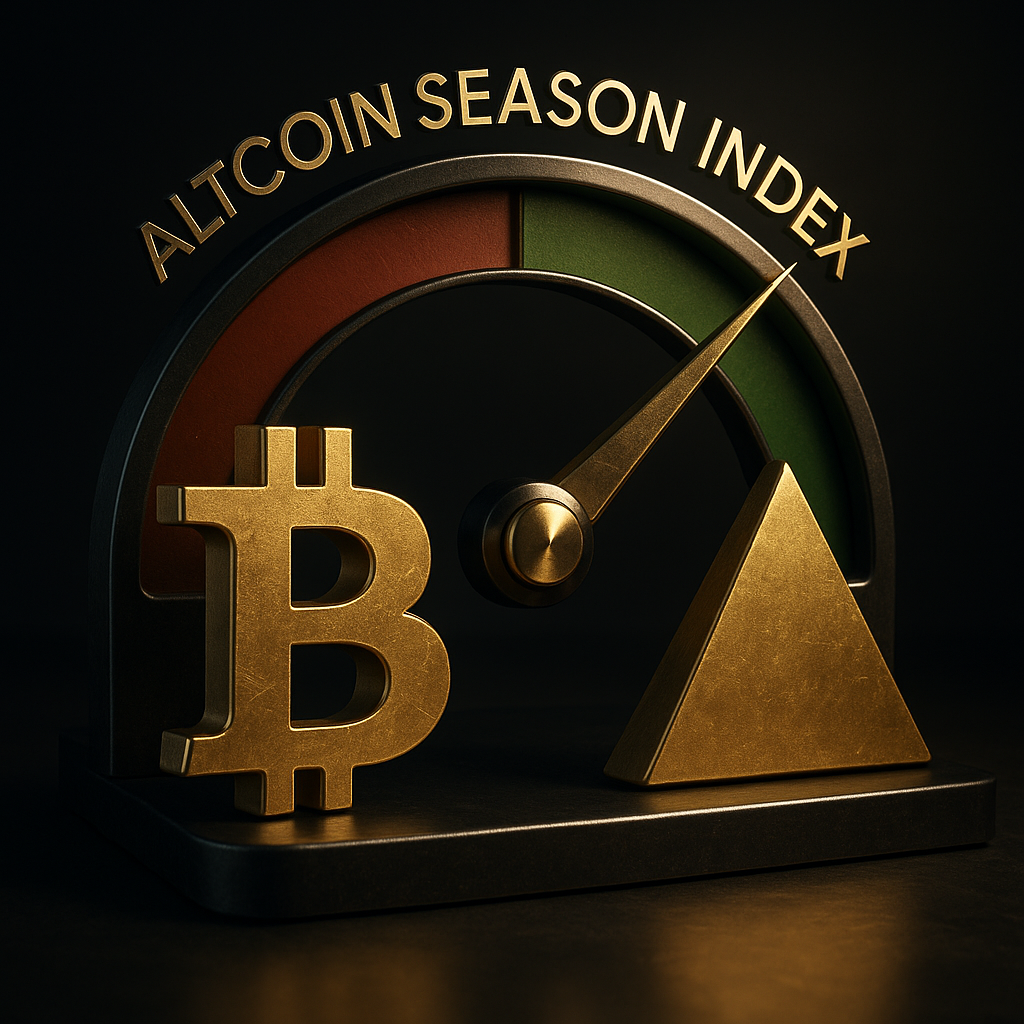
TL;DR: The Altcoin Season Index tracks whether altcoins are outperforming Bitcoin over a rolling 90-day window. Here's what most traders misunderstand about it.
Altcoin Season Index Explained: The Truth Traders Miss
Did you know that a single number claims to tell you when altcoins will explode? The Altcoin Season Index Explained properly reveals that this famous metric is far less magical than most traders believe. In fact, many people misread it entirely and lose money as a result. So let's cut through the noise and understand what this index really shows.
Altcoin Season Index Explained: What It Actually Measures
Here's the thing. The Altcoin Season Index isn't a crystal ball. It's a simple ratio that measures how many of the top 50 cryptocurrencies have outperformed Bitcoin over the last 90 days.
When 75% or more of those coins beat Bitcoin, it's officially "altcoin season." When 25% or fewer do, it's "Bitcoin season." Everything in between is neutral territory.
Think about it this way. Imagine a horse race where you only care whether the field is beating one specific favorite. That's essentially what this index does with Bitcoin as the benchmark.
What I find interesting is how many traders treat the index as a buy signal. But it's backward-looking. It describes what already happened, not what's coming next.
A surprising fact? Stablecoins and wrapped tokens are usually excluded, so the sample is smaller than the "top 50" label suggests. Understanding this nuance matters. The Altcoin Season Index Explained honestly is a temperature reading, not a forecast.
[IMAGE: Dashboard showing Altcoin Season Index gauge | Alt: Altcoin Season Index Explained visual gauge]
Altcoin Season Index Explained: How The Calculation Works
So how does the math actually happen? The methodology tracks the price performance of the top 50 coins by market cap, then compares each one to Bitcoin's own 90-day return.
Every coin gets a simple yes-or-no. Did it outperform Bitcoin? Yes counts toward the index. No doesn't. The final score is just the percentage of coins that said yes.
But here's where it gets tricky. The 90-day window smooths out short-term noise, which sounds great until you realize it also delays signals. By the time the index screams "altcoin season," much of the move may already be over.
Think about it like a thermometer buried in a thick blanket. It reads accurately, but slowly.
What most miss is that the index weights all fifty coins equally. A tiny microcap and a giant like Ethereum both count as one vote. This can distort the picture during periods when only large caps rally. [LINK: how altcoin market caps are calculated]
Did you know the index can flip from Bitcoin season to altcoin season in a matter of weeks during volatile markets? That speed catches unprepared traders off guard. In my view, treating it as one input among many is far smarter than obeying it blindly.
What's Happening With Altcoin Sentiment Right Now
Right now, market sentiment swings faster than ever. And the index reflects that turbulence. During recent cycles, we've seen prolonged Bitcoin dominance interrupted by short, sharp altcoin bursts that fade before most retail traders react.
Why does Bitcoin keep hogging the spotlight? Institutional flows, spot ETF demand, and macro uncertainty all funnel capital toward the safest crypto asset first. Altcoins, being riskier, wait their turn.
Here's a real-world analogy. Think of a party where everyone crowds around the celebrity guest before mingling with the rest of the room. Bitcoin is the celebrity. Altcoins only get attention once the crowd relaxes.
A surprising fact worth noting: liquidity often rotates from Bitcoin into large-cap altcoins first, then trickles down to smaller tokens. This "money flow" pattern is why the index sometimes lags behind what early movers already see.
What I find interesting is how narratives drive these rotations. AI tokens, real-world assets, and meme coins each had their moment, pulling the crypto market sentiment index in different directions. But rotations are messy and rarely clean.
But be careful. A rising index doesn't mean every altcoin wins. It means the majority beat Bitcoin. Your specific bag could still bleed while the index looks bullish.
[IMAGE: Chart showing capital rotation from Bitcoin to altcoins | Alt: altcoin market rotation sentiment chart]
What This Means for You
So what should you actually do with this information? Don't trade on the index alone. Ever.
Use it as context. If the index shows deep Bitcoin season, altcoin risk is elevated and rallies may be traps. If it's climbing toward altcoin season, momentum may favor diversified altcoin positions—but confirm with volume and your own research.
Here's the thing. The index tells you the environment, not the entry. Combine it with fundamentals, on-chain data, and risk management.
Ask yourself this. Are you buying because the data supports it, or because a green gauge triggered your FOMO?
In my view, the smartest traders use the index to calibrate expectations, not to time exact tops and bottoms. Set position sizes based on the broader climate. Stay humble. The market rarely rewards those who chase confirmation bias with borrowed conviction.
Frequently Asked Questions
Q: What is a good Altcoin Season Index score for buying altcoins?
A: There's no universally "good" score. A reading above 75 signals altcoin season, but that often means the move is mature. Many traders find early positioning during neutral readings, between 25 and 75, offers a better risk-to-reward balance overall.
Q: How often does the Altcoin Season Index update?
A: Most platforms update the index daily, recalculating each coin's 90-day performance against Bitcoin. However, because it uses a rolling three-month window, meaningful shifts in the score typically develop gradually over several days or weeks rather than instantly.
Q: Can the Altcoin Season Index predict future prices?
A: No, it can't. The index is backward-looking, describing past performance relative to Bitcoin. It reflects existing market conditions rather than forecasting them. Treat it as one contextual signal among many, never as a standalone predictive trading tool for future moves.
Final Thoughts
The Altcoin Season Index Explained clearly comes down to one truth: it's a mirror, not a map. It reflects where money has already flowed, giving you valuable context about the broader crypto climate. But it won't hand you entries, exits, or guaranteed profits.
Use it wisely. Pair it with research, risk management, and a cool head. And remember that no single indicator survives contact with a chaotic market alone.
Curious to sharpen your edge? Explore our other guides, test the index against your own trades, and start reading market signals with fresh, informed eyes today.
