


TL;DR
The Future of Real World Assets on Blockchain is shifting trillions in value onchain, turning property, bonds, and art into tradable digital tokens. Here's what it means and why it matters to you.
Future of Real World Assets on Blockchain Explained
Did you know that tokenized real-world assets could grow into a $16 trillion market by 2030? The Future of Real World Assets on Blockchain isn't some distant fantasy—it's already reshaping how we own, trade, and verify value. Think about it this way: the same technology that powers crypto coins can now represent a slice of a Manhattan skyscraper. And that changes everything.
Why the Future of Real World Assets on Blockchain Matters
Let's start with the basics. Real-world assets, or RWAs, are tangible or traditional financial things—real estate, treasury bonds, commodities, even fine art—represented as tokens on a blockchain. Why does this matter so much?
Because liquidity has always been the problem. Selling a building takes months. Selling a token takes seconds. That's the gap tokenization closes.
Here's the thing: traditional finance moves slowly, drowning in paperwork and middlemen. Blockchain strips that away with transparent, programmable ownership. In my view, this is the most practical use case crypto has produced so far—far more grounded than meme tokens.
Think of it like converting a giant gold bar into thousands of tiny, tradeable coins. Suddenly, ownership becomes accessible to ordinary people, not just institutions. A surprising fact: BlackRock's tokenized fund crossed $500 million in assets within months of launch, proving big money is paying attention. The Future of Real World Assets on Blockchain rests on this democratization of access. And that's exactly why investors, regulators, and banks are all watching closely.
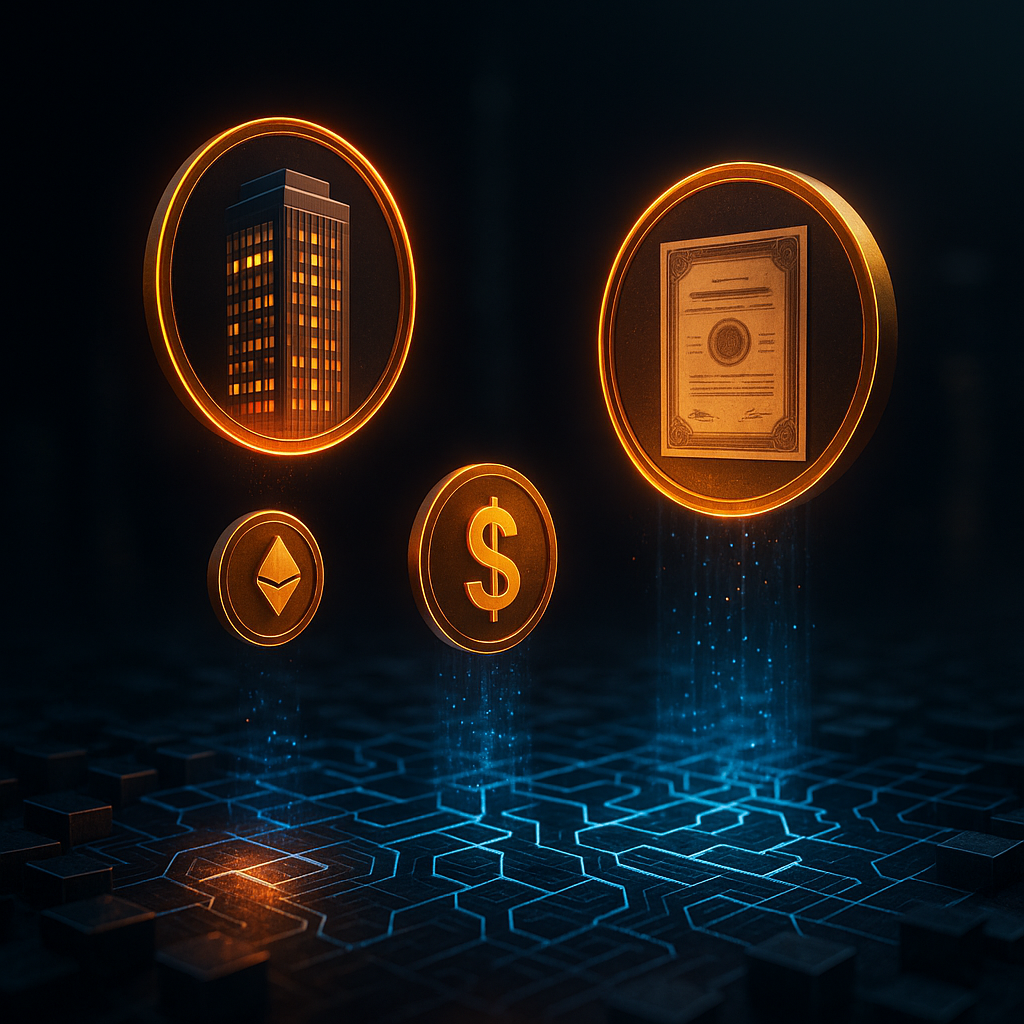
[IMAGE: Digital tokens representing buildings and bonds floating above a blockchain network | Alt: Future of Real World Assets on Blockchain tokenization concept]
How the Future of Real World Assets on Blockchain Actually Works
So how does a physical building become a digital token? Let me break it down.
First, an asset gets legally wrapped—a special-purpose vehicle holds the actual property. Then, ownership rights are issued as tokens through a smart contract. Each token represents a fractional stake, and the blockchain records every transfer immutably.
What most miss is the role of oracles. These data feeds connect offchain reality to onchain code, confirming that the asset still exists and updating its value. Without them, tokenization falls apart.
Here's an analogy. Imagine a concert with a fixed number of seats. Tokenization is like turning each seat into a digital ticket that anyone can buy, sell, or split—while the venue stays exactly the same. The asset doesn't move. The ownership does.
A surprising fact: some platforms now settle tokenized bond trades in seconds, compared to the traditional T+2 settlement window. That's a massive efficiency leap. Stablecoins often act as the payment rail, making transactions smooth and borderless. But regulation still shapes what's possible. Compliance layers verify identities and enforce rules right inside the token itself.
[LINK: Learn more about tokenization and smart contracts]
What's Happening Now in the RWA Space
The momentum is real. Major institutions aren't just experimenting anymore—they're deploying capital.
Tokenized U.S. treasuries have exploded past several billion dollars, becoming one of the fastest-growing segments in crypto. Why treasuries first? Because they're simple, trusted, and yield-bearing. They're the perfect entry point.
Meanwhile, private credit is booming onchain too. Platforms now connect lenders directly with borrowers, cutting out layers of fees. And real estate projects across the globe are slicing properties into affordable tokens.
But let me offer a light opinion. What I find interesting is how traditional finance giants, once skeptical of crypto, are quietly building the rails themselves. They saw the writing on the wall.
Think of it like the early internet. At first, big companies dismissed it. Then they rushed to build websites once they realized the future had arrived. We're at that same inflection point with RWAs.
A surprising fact: JPMorgan's blockchain network has processed over a trillion dollars in transactions. That's not a pilot—that's infrastructure. Stablecoin adoption fuels this growth, providing the liquidity backbone for tokenized markets. Will every asset eventually move onchain? Maybe not. But the direction is undeniable.
[IMAGE: Financial institutions connecting to a global tokenized asset marketplace | Alt: RWA tokenization adoption by banks and institutions]
What This Means for You
So where do you fit into all this? Honestly, closer than you might think.
For everyday investors, tokenization opens doors that were previously locked. You can own a fraction of premium real estate or access institutional-grade yields with small amounts. That's powerful.
But proceed with care. Not every tokenized project is legitimate, and regulations vary wildly by country. Do your homework. Verify the issuer, understand the legal structure, and check whether your tokens are truly backed by real assets.
Here's the thing: early adopters often gain the most, but they also take on the most risk. Balance matters. Start small, learn the platforms, and watch how the ecosystem matures.
In my view, the smartest move is staying informed. The tools are getting easier, and the opportunities are expanding fast. You don't have to dive in headfirst today—but you shouldn't ignore the shift either.
Frequently Asked Questions
Q: What are real-world assets on blockchain?
A: Real-world assets on blockchain are physical or traditional financial assets—like real estate, bonds, or commodities—represented as digital tokens. These tokens prove ownership, enable fractional investing, and allow faster, transparent trading without the heavy paperwork and middlemen found in traditional markets.
Q: Is investing in tokenized assets safe?
A: It can be, but safety depends on the platform and legal backing. Reputable issuers use audited smart contracts and proper regulation. Always verify the asset is genuinely backed, check compliance, and start with small amounts until you understand the risks involved.
Q: Why are banks adopting RWA tokenization?
A: Banks adopt tokenization because it slashes settlement times, reduces costs, and improves transparency. Trades that took days now settle in seconds. It also opens new markets and lets institutions offer fractional, liquid products to a much broader pool of investors worldwide.
Final Thoughts
The Future of Real World Assets on Blockchain represents one of crypto's most grounded and transformative shifts. We're watching traditional finance and decentralized technology finally merge, creating markets that are faster, more open, and more accessible than ever before. Will it happen overnight? No. But the foundation is being laid right now by institutions and innovators alike.
What excites me most is the accessibility—ownership that was once reserved for the wealthy is opening to everyone. Stay curious, stay cautious, and keep learning. If you found this helpful, explore our other guides and start building your understanding of this fast-moving space today.
