


TL;DR: USDT and USDC dominate stablecoins, but they're built on very different foundations of trust. Here's the truth most articles skip about which one deserves your money.
USDT vs USDC: The Truth Nobody Talks About
Here's a fact that might surprise you: the USDT vs USDC debate isn't really about which coin holds a dollar peg better. When you compare USDT vs USDC, you're actually comparing two philosophies of transparency, trust, and control. One prioritizes reach and liquidity. The other bets everything on regulation and clean books. So which side actually wins?
USDT vs USDC: What It Really Means and Why It Matters
Let's start simple. Both USDT (Tether) and USDC (USD Coin) are stablecoins, meaning each token aims to stay worth exactly one dollar. But that's where the similarities start thinning out.
Tether is the older giant. It launched in 2014 and now moves more daily volume than Bitcoin on many days. USDC arrived in 2018, backed by Circle, and marketed itself as the "compliant" alternative. What most miss is that these two aren't just competitors — they represent a split in how crypto handles the concept of trust itself.
Think about it this way. USDT is like the busy corner store that everyone uses because it's always open. USDC is the bank branch with cleaner paperwork but fewer locations. Both give you dollars, yet the guarantee behind each differs.

Here's a surprising fact: USDT's market cap dwarfs USDC's by more than three to one. In my view, that dominance matters more than most casual investors realize, because liquidity shapes everything from trading spreads to withdrawal speed.
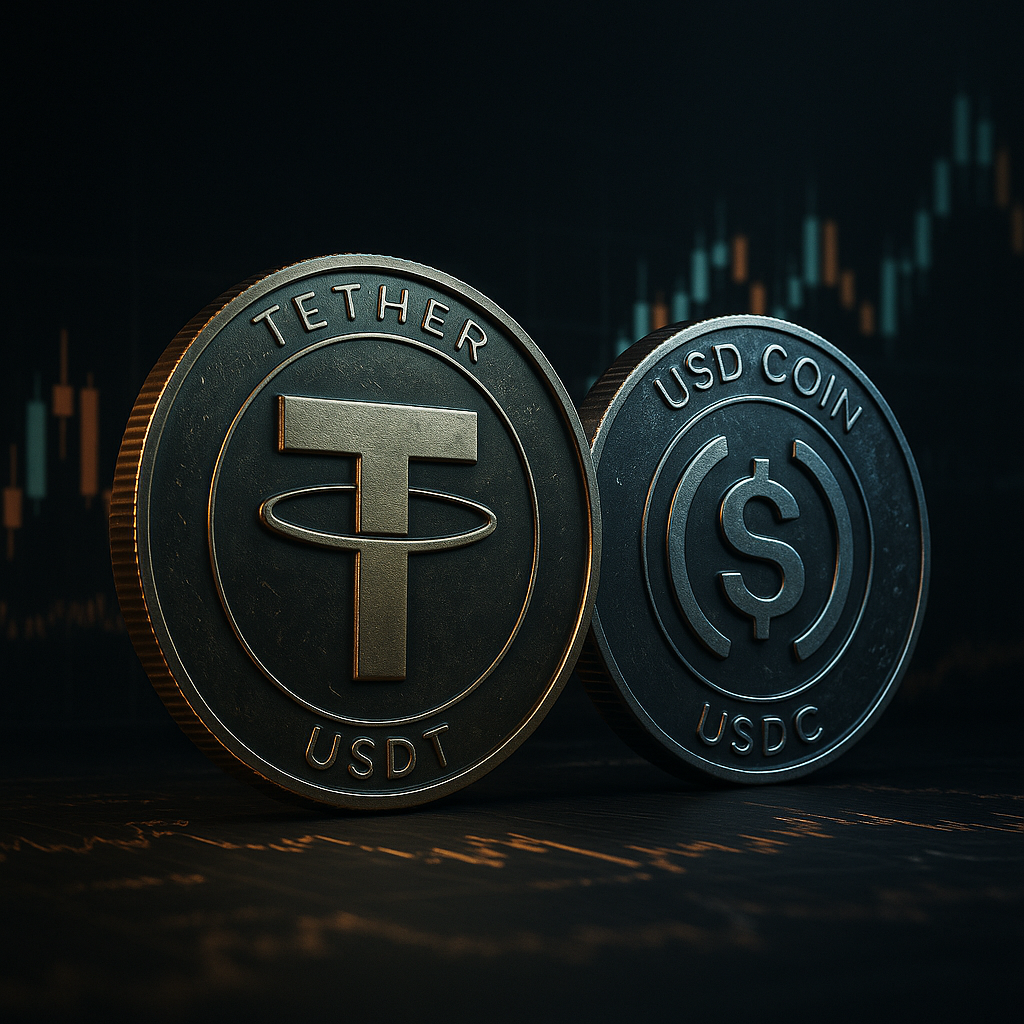
[IMAGE: Side-by-side comparison of USDT and USDC logos on a market chart | Alt: USDT vs USDC stablecoin comparison chart]
USDT vs USDC: How Each Stablecoin Actually Works
So how do these tokens stay pegged to a dollar? Both claim to hold reserves — real assets backing every token in circulation. But the quality of those reserves is where the USDT vs USDC story gets spicy.
USDC, run by Circle, holds its reserves mostly in cash and short-term U.S. Treasuries. Its monthly attestations are handled by major accounting firms. That's clean, boring, and reassuring. Because of this, many institutions prefer USDC for large transactions.
USDT is messier historically. Tether faced fines and legal scrutiny over its reserve claims years ago. And here's the thing — it has since shifted toward Treasuries too, publishing regular reserve breakdowns. But its critics still question the full picture.
A surprising fact? Tether has become one of the largest holders of U.S. Treasury bills on the planet, rivaling entire countries. That's wild for a company most people never think about.
Both tokens mint and burn based on demand. Deposit a dollar, get a token. Redeem a token, get your dollar back. Simple in theory. What I find interesting is how differently each handles that redemption trust during market panics. [LINK: how stablecoin reserves work]
The Impact: What's Happening Right Now
The stablecoin landscape is shifting fast, and regulation is the driving force. Governments worldwide are drafting rules that could reshape this entire industry. Would you trust a stablecoin that regulators might freeze overnight?
USDC leans into this reality. Circle actively cooperates with authorities and can freeze wallets tied to illicit activity. Some see that as safety. Others see it as centralized control creeping into crypto's decentralized dream. During the 2023 banking crisis, USDC briefly lost its peg when Circle revealed exposure to the collapsed Silicon Valley Bank. That was a scary moment.
USDT, meanwhile, weathered the same storm without breaking a sweat. Its global, offshore structure made it feel almost bulletproof to some traders. But that same distance from U.S. banks is exactly what worries regulators.
Here's a surprising fact: USDT is the dominant stablecoin across emerging markets, where people use it to escape inflation and unstable local currencies. Think of it like digital dollars in a pocket, accessible anywhere with a phone.
In my view, this real-world utility explains why USDT keeps growing despite years of skepticism. It solves an actual problem for millions. [LINK: stablecoin regulation guide]
[IMAGE: World map showing stablecoin adoption in emerging markets | Alt: USDT and USDC global adoption map]
What This Means for You
So where does this leave your decision? It depends entirely on what you value.
If you prioritize transparency and plan to hold large amounts, USDC's cleaner reserves and regular attestations offer peace of mind. But if you trade actively or live somewhere with limited banking access, USDT's massive liquidity and global reach are hard to beat.
Here's my honest take. Diversifying between both isn't a bad move. Don't marry one stablecoin. Spread your risk, just like you would with any asset.
And remember — no stablecoin is truly risk-free. Both depend on companies keeping their promises. Ask yourself: how much do you trust the entity behind your digital dollars? That single question should guide your choice more than any marketing claim.
Frequently Asked Questions
Q: Is USDT safer than USDC?
A: Neither is universally safer. USDC offers more transparent reserves and regular attestations, appealing to institutions. USDT provides greater liquidity and global reach but faces more regulatory scrutiny. Your ideal choice depends on whether you prioritize compliance and clarity or accessibility and trading volume.
Q: Which stablecoin has more liquidity?
A: USDT has significantly more liquidity, with a market cap roughly three times larger than USDC. This means tighter trading spreads, faster withdrawals, and wider exchange support. That deep liquidity makes USDT the default choice for many active traders worldwide.
Q: Can USDT or USDC lose their dollar peg?
A: Yes, both can temporarily lose their peg during extreme stress. USDC briefly de-pegged during the 2023 Silicon Valley Bank collapse. USDT has dipped during past panics too. Pegs usually recover quickly, but no stablecoin guarantees a permanent one-to-one dollar value.
Final Thoughts
The USDT vs USDC debate has no single winner, and honestly, that's the truth nobody wants to admit. Each stablecoin serves different needs. USDC wins on transparency and regulatory friendliness, while USDT wins on liquidity, adoption, and real-world utility across the globe.
What I find most interesting is that both keep growing despite constant criticism. That tells you the market wants options, not one dominant coin. So don't let anyone tell you there's only one right answer.
Do your own research, understand the risks behind each reserve model, and choose based on your goals. Curious to dig deeper into stablecoin safety? Explore our other guides and make your next move with confidence.
