


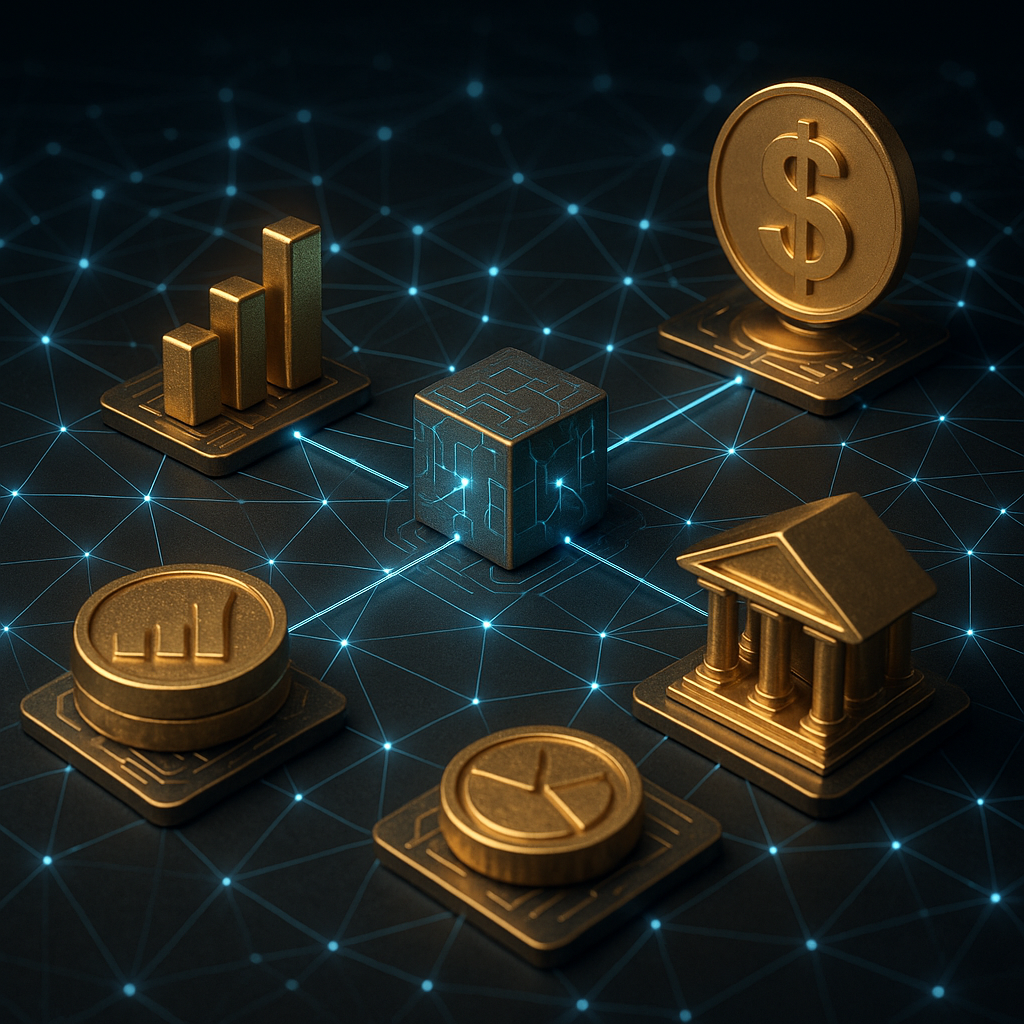
TL;DR: Decentralized finance rebuilds banking without banks, using code instead of middlemen. It's powerful, risky, and here's the truth most articles skip.
What Is Decentralized Finance? The Truth Nobody Talks About
Here's a wild fact: over $100 billion has flowed through decentralized finance protocols, and most people still can't explain what is decentralized finance in one sentence. But that's the point of this article. Understanding what is decentralized finance means seeing past the hype and into the machinery that could reshape money itself. Ready for the version nobody sugarcoats?
What Is Decentralized Finance and Why It Matters
So let's cut to it. Decentralized finance, or DeFi, is a system of financial tools built on blockchain networks that run without banks, brokers, or middlemen. Think about it this way: instead of a bank approving your loan, a piece of code does it automatically, instantly, and without asking who you are.
What most miss is that this isn't just a tech upgrade. It's a philosophical shift. Money that moves without permission changes who holds power.
Here's the thing—traditional finance is a walled garden. DeFi tears down the walls. And that matters because roughly 1.4 billion adults worldwide still have no bank account. For them, a smartphone plus DeFi could mean access they've never had.
Surprising fact? The first major DeFi protocol, MakerDAO, launched all the way back in 2017 and still holds billions today. In my view, the reason DeFi matters isn't the returns people chase. It's the idea that financial infrastructure can belong to everyone, not a select few. Why should geography decide whether you can save or borrow?
[IMAGE: Diagram of DeFi ecosystem versus traditional banking | Alt: what is decentralized finance visual comparison]
What Is Decentralized Finance? How It Actually Works
Now the fun part. When you ask what is decentralized finance under the hood, you're really asking about smart contracts. These are self-executing programs living on blockchains like Ethereum. They hold the rules, hold the money, and enforce agreements without a human signing anything.
Picture a vending machine. You put in a coin, you get your snack—no cashier needed. Smart contracts work the same way. Deposit crypto, and the code lends it out, earns you interest, or swaps it for another token automatically.
But how does anyone trust code with real money? Because it's transparent. Anyone can read the contract's logic before using it. That's radically different from your bank, which never shows you its internal rules.
DeFi stacks together too. Lending protocols, decentralized exchanges [LINK: how decentralized exchanges work], and stablecoins snap together like Lego blocks. Developers call this "composability."
Here's a surprising fact: some DeFi protocols process billions in trades daily with zero employees managing transactions. And because everything's open-source, a good idea spreads across the ecosystem in days, not years. So innovation moves fast—sometimes recklessly fast, which brings us to the risks.
The Impact and What's Happening Now
DeFi's growth has been jaw-dropping and messy in equal measure. What I find interesting is how quickly it went from a nerdy experiment to a target for regulators worldwide. That's what happens when billions start moving outside official channels.
Right now, we're seeing real institutions dip their toes in. BlackRock launched a tokenized fund. Traditional banks are quietly experimenting with blockchain settlement. The line between old finance and DeFi is blurring.
But let's be honest about the ugly side. Billions have been lost to hacks and scams. Rug pulls—where developers vanish with users' money—are painfully common. Think of DeFi like the early internet: full of promise, but also full of con artists and broken links.
Surprising fact? In 2022 alone, DeFi protocols lost over $3 billion to exploits. That's not a typo.
So where does that leave us? Stablecoins are becoming the quiet backbone, offering dollar-pegged value without volatility. Meanwhile, layer-2 networks are slashing transaction fees, making DeFi usable for regular people, not just whales.
Is DeFi ready for mainstream adoption? Not quite. But the infrastructure improves monthly, and the momentum feels unstoppable. And that tension—huge potential versus real danger—defines the whole space right now.
[IMAGE: Chart showing DeFi total value locked over time | Alt: decentralized finance growth statistics]
What This Means for You
Here's the practical takeaway. You don't need to bet your savings to explore DeFi. Start small. Learn how a wallet works before you deposit a single dollar.
Because in this world, you are your own bank. That's freedom, but it's also responsibility. Lose your keys, and there's no customer service hotline to call.
My honest advice? Treat early DeFi money like money you can afford to lose. Read the smart contract audits [LINK: understanding smart contract audits]. Stick to established protocols with track records.
What most miss is that education is the real edge here. The people who thrive aren't the loudest gamblers—they're the ones who understood the mechanics first. So slow down. Learn. Then decide whether this financial revolution deserves a spot in your portfolio.
Frequently Asked Questions
Q: What is decentralized finance in simple terms?
A: Decentralized finance is a way to borrow, lend, trade, and earn interest on money using blockchain technology instead of banks. Smart contracts automatically handle transactions, removing middlemen. It's open to anyone with an internet connection and a crypto wallet, no approval required.
Q: Is DeFi safe to use?
A: DeFi carries real risks, including hacks, scams, and code bugs. It offers no government protection or refunds. However, using established, audited protocols and never investing more than you can afford to lose significantly reduces your exposure to major losses.
Q: How do people make money with DeFi?
A: People earn through lending crypto for interest, providing liquidity to exchanges for fees, staking tokens, and yield farming. Returns can be high but come with matching risks. Always research each strategy carefully before committing any funds you can't afford to lose.
Final Thoughts
So what's the real truth about DeFi? It's neither the utopia the hype merchants promise nor the scam the skeptics claim. Understanding what is decentralized finance means holding both ideas at once—massive potential and genuine risk living side by side. In my view, DeFi won't replace banks tomorrow. But it's already forcing the entire financial world to evolve, and that alone makes it worth watching.
The best move you can make is to keep learning before you leap. Curious to go deeper? Explore our beginner guides and take your first careful step into this new world.
