


TL;DR: Bitcoin often swings hard right after Fed announcements because interest rates shape how investors treat risky assets. Understanding this link helps you trade smarter and panic less.
Why Bitcoin Price Moves After Fed Decisions: Explained
Did you know Bitcoin can move 5% in the minutes after a single Fed statement? Why Bitcoin price moves after Federal Reserve decisions comes down to one simple force: money. When the Federal Reserve speaks, global liquidity shifts, and crypto feels it fast. So let's unpack exactly what's happening and why it matters to your portfolio.
Why Bitcoin Price Moves After Federal Reserve Decisions: Why It Matters
Here's the thing—Bitcoin doesn't exist in a bubble. It trades in the same ocean of capital as stocks, bonds, and commodities. So when the Fed changes interest rates, it changes the price of money everywhere.
Why does this matter for a decentralized asset? Because investors compare returns. When rates rise, safe assets like Treasury bonds start paying more, and suddenly risky bets like crypto look less attractive by comparison. When rates fall, the opposite happens—cheap money flows into aggressive assets.
Think about it this way. Imagine a garden where water is money. When the Fed opens the tap, everything grows, including Bitcoin. When it tightens the flow, the thirstiest plants struggle first.

What I find interesting is how sensitive crypto has become. A surprising fact: Bitcoin's correlation with the Nasdaq hit record highs in 2022, behaving more like a tech stock than digital gold. That surprised plenty of early believers.
In my view, understanding this connection is the single biggest edge a retail investor can gain. Because macro moves markets. [LINK: how interest rates affect crypto]
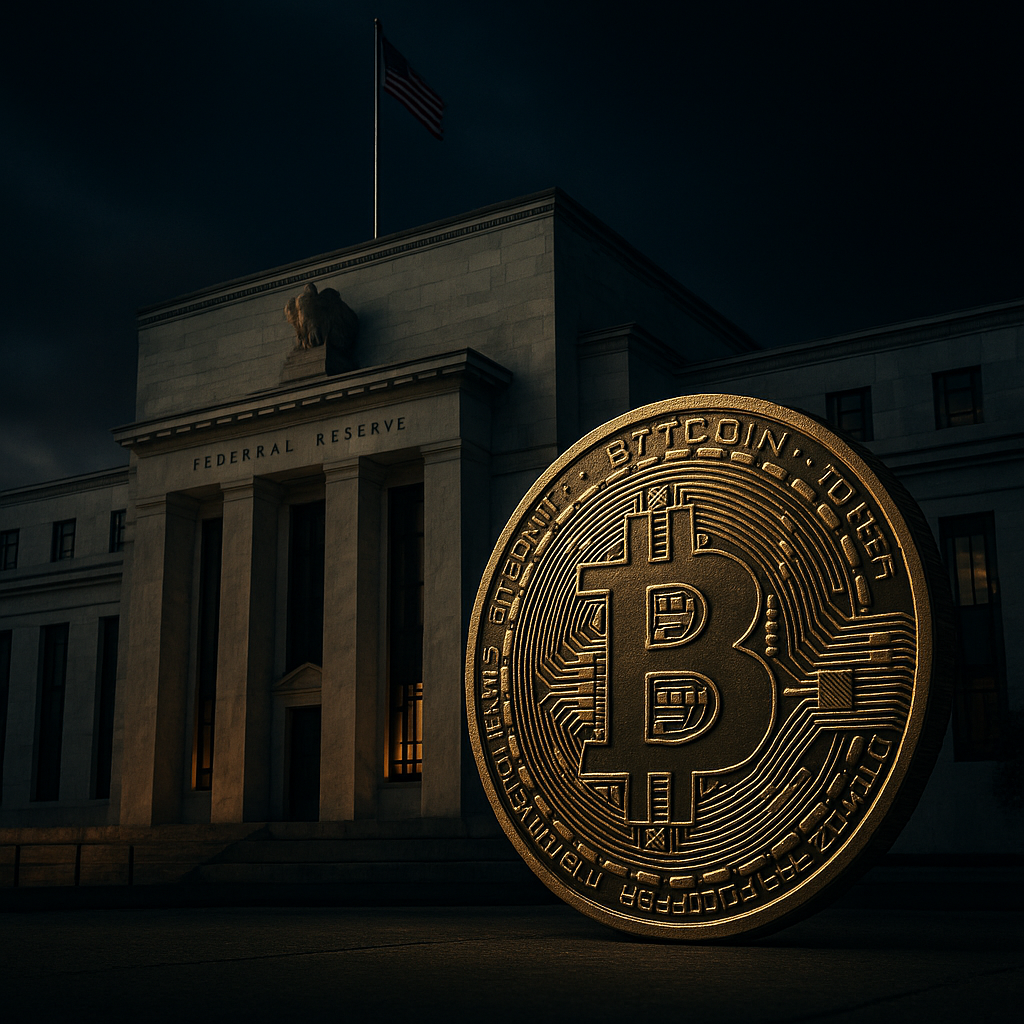
[IMAGE: Federal Reserve building with Bitcoin logo | Alt: Why Bitcoin price moves after Federal Reserve decisions explained]
Why Bitcoin Price Moves After Federal Reserve Decisions: How It Works
So how does a decision in a Washington boardroom ripple into your crypto wallet within seconds?
It starts with the Federal Open Market Committee, or FOMC. Eight times a year, they announce rate decisions and share their economic outlook. Traders don't just react to the number—they react to the tone. This is where market sentiment gets tricky.
But here's what most miss. The actual rate move is often already "priced in." Markets guess the outcome ahead of time. What really moves Bitcoin is the surprise—the gap between expectation and reality.
Think of it like a movie you've already read spoilers for. The plot twist doesn't shock you. But if the ending changes at the last second? That's when everyone reacts.
Jerome Powell's press conferences amplify this. A single hawkish sentence about future inflation can trigger a wave of selling. And algorithmic trading bots scan his words in real time, executing trades before humans finish reading.
A surprising fact: studies show Bitcoin volatility can spike over 300% in the hour following an FOMC statement compared to a normal hour.
And because crypto trades 24/7, there's no closing bell to cool things down. The reaction is instant and relentless. [LINK: understanding FOMC meetings]
Impact: What's Happening Now
Right now, the relationship between the Fed and crypto is tighter than ever. Institutional adoption changed the game completely.
Why? Because big players—hedge funds, ETFs, corporate treasuries—now hold Bitcoin. And these institutions trade on macro signals, not memes. When they rebalance based on Fed policy, the volume is enormous.
The launch of spot Bitcoin ETFs pulled crypto deeper into traditional finance. That means rate decisions hit harder and faster than in previous cycles. Digital assets are no longer a fringe playground.
Consider it like a small boat that suddenly got tied to a massive cruise ship. When the big ship turns, the little boat has no choice but to follow.
Is this good or bad for Bitcoin? Honestly, it's both. More stability during calm periods, but sharper reactions during Fed events.
A surprising fact: in 2024, some Bitcoin ETFs saw over a billion dollars in single-day inflows shortly after dovish Fed signals hinted at rate cuts.
In my view, this trend won't reverse. As long as institutions dominate, macro policy will drive crypto price action. What most miss is that "decoupling" from stocks remains more hope than reality for now.
[IMAGE: Bitcoin price chart spiking after Fed announcement | Alt: Bitcoin price reaction to Federal Reserve interest rate decision]
What This Means for You
So what should you actually do with this knowledge?
First, mark your calendar. Know when FOMC meetings happen and expect volatility around those dates. Don't get caught off guard by a sudden 8% swing.
Second, resist knee-jerk reactions. The initial spike often reverses within hours as markets digest the news. Patience beats panic almost every time.
Here's the thing—you don't need to trade every Fed event. Sometimes the smartest move is simply doing nothing and holding through the noise.
Think of it like weathering a storm. You don't rebuild your house every time the wind blows. You prepare, then wait it out.
Should you size your positions with this volatility in mind? Absolutely. Use risk management so a single announcement can't wreck you. [LINK: crypto risk management basics]
Frequently Asked Questions
Q: Why does Bitcoin drop when the Fed raises interest rates?
A: Higher rates make safer assets like bonds more attractive, pulling money away from risky investments. Bitcoin, viewed as high-risk, often sells off as investors seek guaranteed returns instead. Tighter money supply also reduces speculative buying, adding downward pressure on crypto prices.
Q: How long does Bitcoin volatility last after a Fed decision?
A: The sharpest moves usually happen within the first hour after the announcement and press conference. Elevated volatility can persist for a day or two as markets fully digest the Fed's tone, forward guidance, and implications for future monetary policy.
Q: Does the Fed directly control Bitcoin's price?
A: No, the Fed has no direct control over Bitcoin. Its influence is indirect, working through interest rates, liquidity, and investor sentiment. When the Fed shapes the cost of money across markets, Bitcoin reacts alongside stocks and other risk assets.
Final Thoughts
Understanding why Bitcoin price moves after Federal Reserve decisions gives you a serious advantage in a market ruled by emotion. The connection is simple at its core: money flows where returns look best, and the Fed sets the rules of that flow.
But knowledge alone isn't enough. You've got to apply it with patience and discipline. Don't let a single hawkish sentence shake you out of a solid long-term plan.
What I find interesting is how predictable the pattern becomes once you know what to watch. So stay curious, keep learning, and treat every Fed meeting as a lesson.
Ready to trade smarter? Start tracking the next FOMC date today and watch the market with fresh eyes.
