

Cosmos ATOM Tokenomics and Use Cases Explained
TL;DR: ATOM powers the Cosmos network through staking, governance, and security. Here's a clear breakdown of its tokenomics and real-world use cases.
Cosmos ATOM Tokenomics and Use Cases Explained
Did you know Cosmos ATOM has no fixed supply cap? Understanding Cosmos ATOM tokenomics and use cases means accepting that inflation isn't always a dirty word. In fact, ATOM's inflation is a feature, not a bug. It's designed to reward the people who keep the network safe, and that changes everything about how you should think about this token.
What Is Cosmos ATOM Tokenomics and Use Cases
So what exactly are we talking about here? Cosmos ATOM tokenomics and use cases revolve around a network built to connect independent blockchains. ATOM is the native token of the Cosmos Hub, the central chain in this ecosystem often called the "Internet of Blockchains."
Here's the thing. ATOM isn't meant to be just a payment coin. Its main jobs are securing the network through staking, enabling governance votes, and paying transaction fees.
Think about it this way. If the Cosmos Hub were a country, ATOM would be both the currency and the voting ballot. You hold it, you stake it, and you get a say.
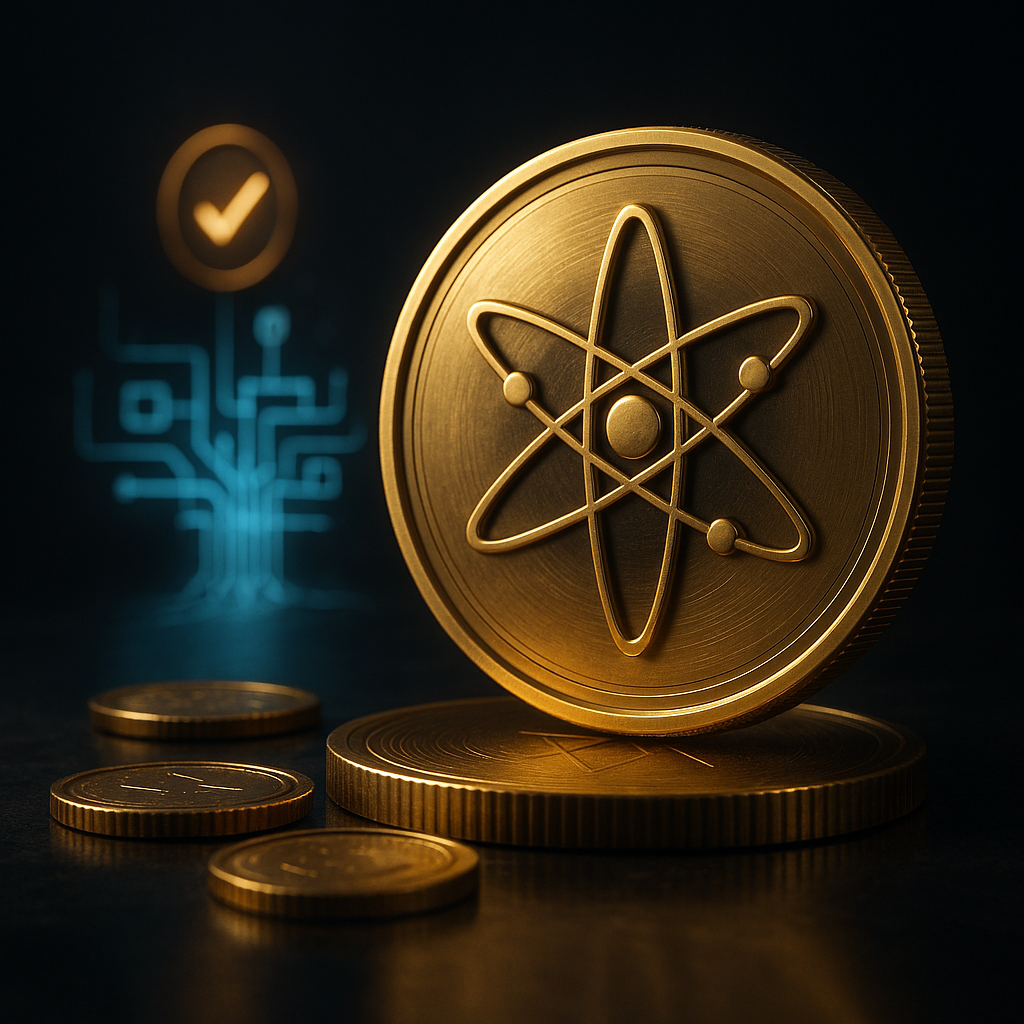
What most miss is that ATOM's supply is dynamic. The inflation rate adjusts between 7% and 20% based on how much is staked. Surprising fact: if too few people stake, inflation rises to encourage more participation. In my view, that self-balancing mechanism is one of the smartest designs in crypto. But it confuses newcomers who expect a hard cap like Bitcoin. Cosmos plays a different game entirely.
[IMAGE: Cosmos Hub ecosystem diagram | Alt: Cosmos ATOM tokenomics and use cases overview]
How Cosmos ATOM Tokenomics and Use Cases Actually Work
Let's dig into the mechanics. When you stake ATOM, you delegate it to a validator who processes transactions and produces blocks. In return, you earn staking rewards paid out in new ATOM.
But there's a catch. Validators can be slashed for misbehavior, and delegators share that risk. So choosing a reliable validator matters a lot.
Why does staking sit at the heart of everything? Because the Cosmos Hub uses Proof-of-Stake consensus. The more ATOM staked, the more secure and expensive to attack the network becomes.
Think of it like a neighborhood watch. The more residents who join, the safer the whole street. Your staked ATOM is your commitment to that watch.
And governance is huge here. ATOM holders vote on proposals ranging from software upgrades to community fund spending. One staked ATOM equals one vote.
Surprising fact: Cosmos governance once passed a proposal to reduce ATOM's maximum inflation, showing real community power. What I find interesting is how active these voters are compared to many other chains. So ATOM isn't passive. It's a working asset with responsibilities baked in.
[LINK: Learn how Proof-of-Stake consensus works]
What's Happening Now With Cosmos
The Cosmos ecosystem is evolving fast. The big story lately is the ATOM 2.0 vision and ongoing debates about ATOM's economic role across dozens of connected chains.
Here's the thing. Interchain Security launched, letting new blockchains "rent" security from the Cosmos Hub. This means ATOM stakers can earn rewards from multiple chains, not just the Hub itself.
But not everyone agrees on the direction. Some community members worry about ATOM's value accrual, arguing it captures too little of the ecosystem's growth. It's a genuine tension.
Think about it this way. Cosmos built the roads, but the toll booths are still being figured out. Many successful chains like Osmosis and Injective launched using Cosmos technology yet run their own tokens.
Surprising fact: over 90 chains now operate in the broader Cosmos network, secured by the IBC protocol. Isn't that a massive footprint for something most casual investors overlook? In my view, the interchain security model could redefine ATOM's future. But adoption takes time. The secondary keyword here, interchain security, is reshaping how people evaluate ATOM's long-term worth.
[IMAGE: Interchain security connecting Cosmos chains | Alt: Cosmos ATOM tokenomics staking rewards chart]
What This Means for You
So where does this leave you as an investor or builder? ATOM offers a way to earn passive income through staking while participating in real network decisions.
But you need to weigh the risks. Inflation dilutes holders who don't stake, so simply holding ATOM in a wallet may erode your share over time.
Here's the honest takeaway. If you believe in the interchain thesis, staking ATOM lets you earn while supporting infrastructure you find valuable.
Think of it like owning shares in the toll company for a growing highway system. The more traffic, the more potential value.
And governance gives you a voice most tokens don't. Want to influence a major blockchain ecosystem? ATOM makes that possible. Just do your research on validators first.
[LINK: Beginner's guide to staking crypto safely]
Frequently Asked Questions
Q: What is ATOM used for in the Cosmos network?
A: ATOM secures the Cosmos Hub through staking, powers governance voting, and pays transaction fees. Holders delegate tokens to validators to earn rewards and help protect the network. It also plays a growing role in interchain security across connected blockchains.
Q: Does Cosmos ATOM have a maximum supply?
A: No, ATOM has no fixed supply cap. Its inflation rate adjusts dynamically between 7% and 20% depending on how much ATOM is staked. This flexible model encourages participation and rewards active stakers over passive holders who leave tokens idle.
Q: Is staking ATOM worth it?
A: Staking ATOM can offer attractive rewards that often offset inflation, plus governance rights. However, staked tokens face unbonding periods and slashing risk from poorly performing validators. It suits investors who believe in the Cosmos ecosystem's long-term interchain vision.
Final Thoughts
Understanding Cosmos ATOM tokenomics and use cases gives you an edge in a crowded market. ATOM isn't a simple store-of-value play. It's a working asset that rewards participation through staking, governance, and now interchain security.
Here's the thing. The dynamic inflation model punishes passivity but rewards those who engage. And with dozens of chains connected through IBC, the network's ambitions are enormous.
In my view, ATOM's future depends on how well it captures value from that growing ecosystem. So do your homework, weigh the risks, and decide if the interchain thesis fits your strategy.
Ready to dive deeper? Explore staking options and start earning today.
