


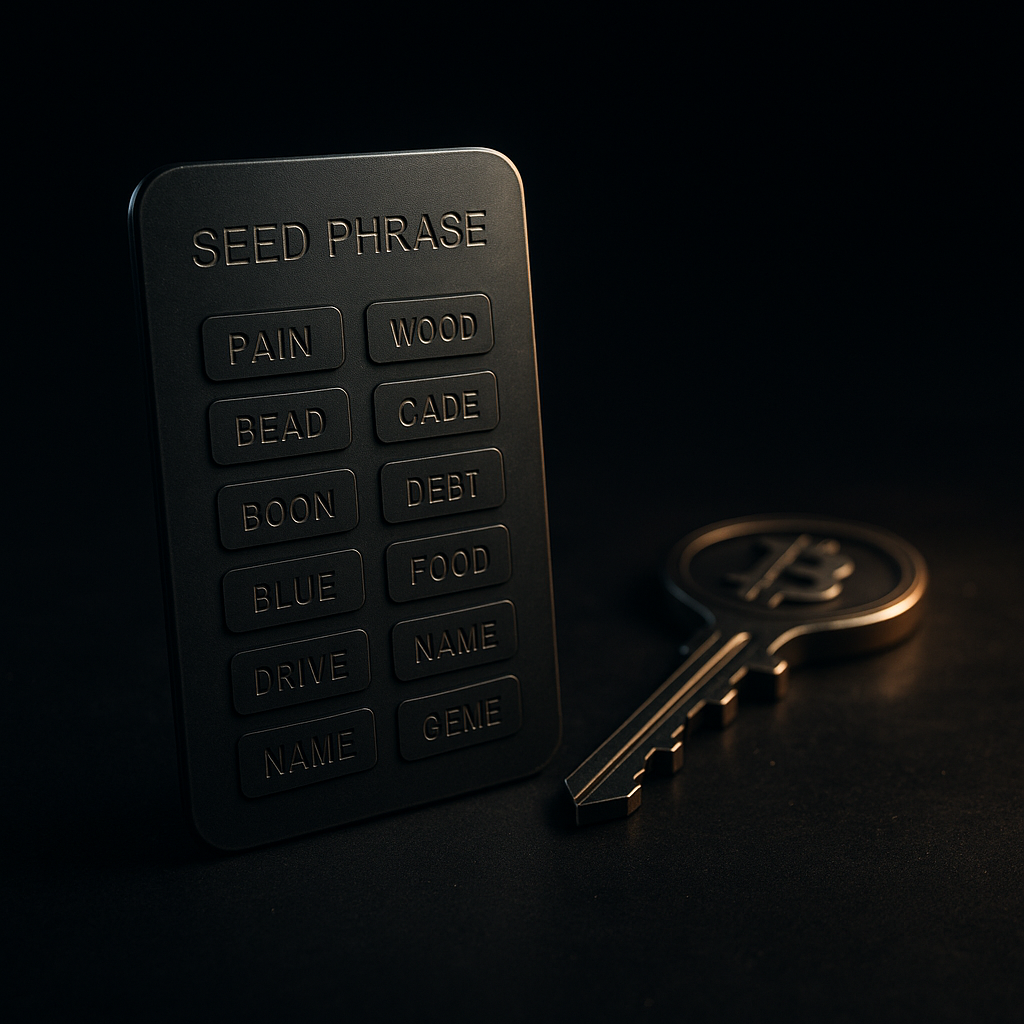
TL;DR: A seed phrase and a private key aren't the same thing, and confusing them can cost you everything. This guide breaks down the difference in plain language.
Seed Phrase vs Private Key: The Truth Nobody Explains
Here's a fact that surprises most newcomers: your seed phrase can generate thousands of private keys, but a single private key can't rebuild your seed phrase. Understanding Seed Phrase vs Private Key Explained isn't just crypto trivia — it's the difference between keeping your funds safe and losing them forever. Think about it this way: one is the master, the other is a servant. So why does nobody explain this clearly? Let's fix that.
Seed Phrase vs Private Key Explained: Why It Matters
What most miss is that these two things live on different levels of your wallet. A seed phrase — usually 12 or 24 words — is the human-readable master backup for your entire wallet. A private key, on the other hand, unlocks a single account or address.
Think about it this way. Your seed phrase is like the master key to an entire apartment building. Each private key is the key to one specific apartment inside it. Lose one apartment key? You still control the building. Lose the master? Everything's gone.
Here's the thing — most people back up the wrong one. In my view, that's the single biggest cause of avoidable losses in crypto. And here's a surprising fact: the 12-word seed phrase standard (BIP-39) offers 128 bits of security, roughly the same strength as a private key itself.
Why does this matter for you? Because knowing which one to guard changes how you store your funds. Guarding a private key while ignoring your seed phrase is like locking your car but leaving the house wide open.
[IMAGE: Diagram showing seed phrase generating multiple private keys | Alt: Seed Phrase vs Private Key Explained hierarchy diagram]
Seed Phrase vs Private Key Explained: How It Actually Works
So how do these two connect under the hood? It starts with randomness. Your wallet generates a large random number, then converts it into that friendly list of words. That's your seed phrase.
From that seed, a mathematical process called derivation creates a master key. And from the master key, your wallet spins out countless private keys — one for every address you'll ever use. Each private key then produces a public key, and that public key becomes your wallet address.
Think of it like a family tree. The seed phrase is the ancestor. Private keys are the descendants. But you can't reverse-engineer the ancestor from a single descendant. That one-way street is what makes the system secure.
Here's a surprising fact: the same seed phrase will generate the exact same private keys on any compatible wallet, anywhere in the world. That's why you can restore a [LINK: hardware wallet setup guide] on a brand-new device using only your words.
But there's a catch. Because private keys are cryptographic tools, they're nearly impossible to memorize — so wallets hide them from you. You rarely see them, and that's by design.
The Real-World Impact of Getting This Wrong
Now let's talk consequences. Because theory means nothing if you can't apply it.
Imagine backing up a single private key from your wallet, then feeling safe. You then send funds to a new address inside the same wallet. That new address uses a different private key — one you never backed up. If your device dies, those funds vanish. Poof.
This happens more than you'd think. What I find interesting is that people trust screenshots and cloud notes for something worth thousands. Would you photograph your bank vault combination and email it to yourself?
A real-world analogy: it's like saving one page of a book and expecting to reprint the whole novel. The seed phrase is the whole novel.
Surprising fact: analysts estimate that around 20% of all Bitcoin — worth billions — is permanently lost, much of it due to poor backup habits and confusion between keys and phrases. Cold storage and proper self-custody could've prevented much of it.
So the impact is huge. Guarding the seed phrase protects every current and future address. Guarding just a private key protects one slice — and a shrinking one at that.
[IMAGE: Person writing seed phrase on steel backup plate | Alt: secure seed phrase backup vs private key storage]
What This Means for You
Here's your action plan. Back up your seed phrase first — always. Write it on paper or, better, stamp it into metal that survives fire and water. Store copies in separate physical locations.
Never type your seed phrase into a website. Never store it in cloud photos. And don't share it with "support agents" — real ones never ask.
Private keys? You'll rarely need them directly. But if you export one, treat it with the same paranoia. In my view, most users should focus almost entirely on protecting the seed phrase and let the wallet handle key management. Consider a [LINK: beginner's guide to cold storage] if you're holding meaningful amounts. Simple habits beat fancy tools every time.
Frequently Asked Questions
Q: Is a seed phrase the same as a private key?
A: No. A seed phrase is a master backup that generates many private keys, while a private key controls just one address. The seed phrase sits higher in the hierarchy, meaning it can recreate every private key in your wallet, but a single key can't recreate the phrase.
Q: Can someone steal my crypto with just my private key?
A: Yes. Anyone holding a private key can access and drain the funds tied to that specific address. However, they'd only control that one address — not your entire wallet — unless they also obtained your full seed phrase, which unlocks everything.
Q: Which should I back up, the seed phrase or private key?
A: Always back up your seed phrase first. It restores your whole wallet, including all current and future addresses and their private keys. Backing up individual private keys is optional and only protects one address each, leaving future funds exposed.
Final Thoughts
So here's the truth nobody explains clearly: the seed phrase is your master key, and the private key is just one door it opens. Getting Seed Phrase vs Private Key Explained right means you'll never confuse the two again — and that clarity alone can save your entire portfolio. Protect your words, treat them like the crown jewels, and let your wallet manage the rest. In my view, this single concept separates confident crypto holders from anxious ones. Ready to lock things down properly? Start by reviewing your backup today and upgrade to metal storage before you buy another coin.
