


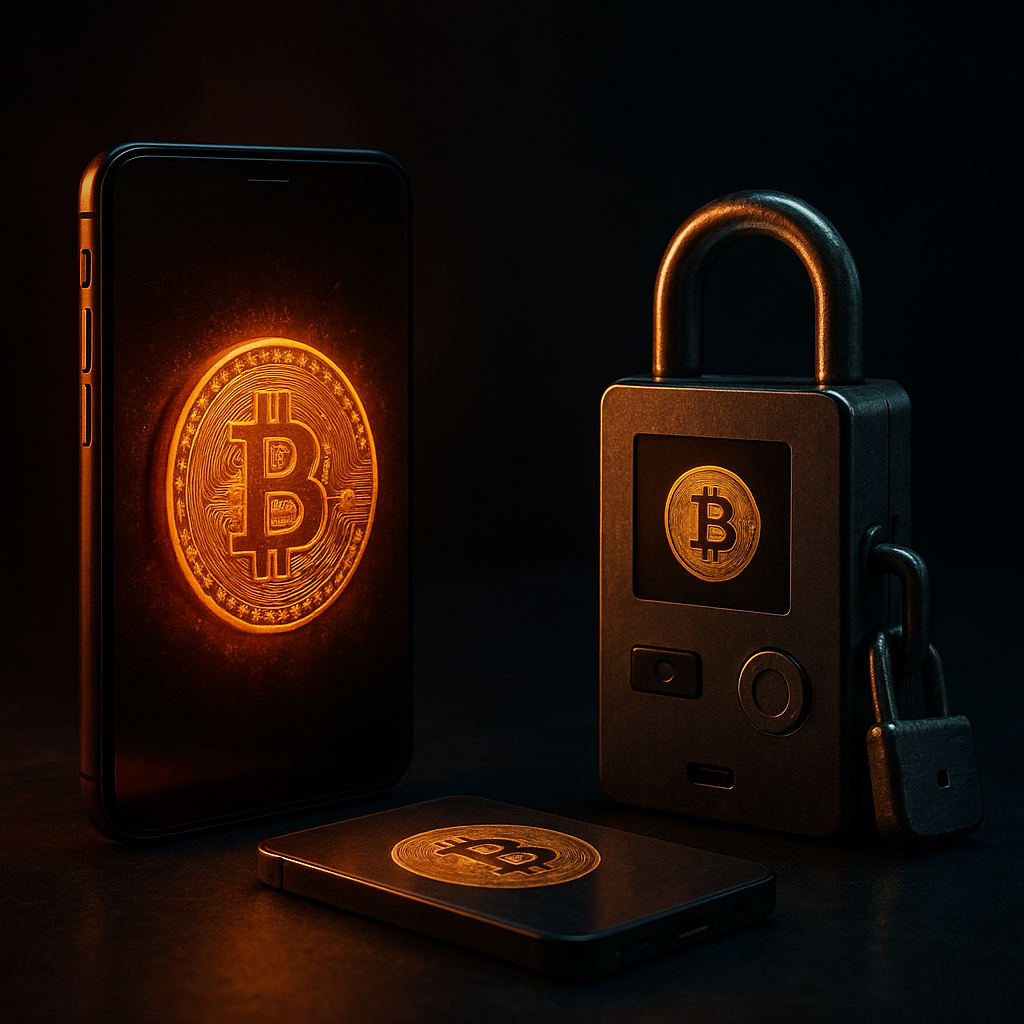
TL;DR: Hot wallets offer speed and convenience; cold wallets deliver ironclad security. Here's how to decide which fits your crypto in 2025.
Hot Wallet vs Cold Wallet: Which Is Safer in 2025?
Did you know that over $2 billion in crypto was stolen from online wallets in a single year? That statistic frames the whole debate: Hot Wallet vs Cold Wallet Which Is Safer becomes more than theory when real money vanishes. In 2025, with hackers growing smarter and regulations tightening, choosing the right storage isn't optional. It's survival.
Hot Wallet vs Cold Wallet Which Is Safer — Why It Matters
Let's start with the basics. A hot wallet stays connected to the internet, while a cold wallet lives offline. That single difference shapes everything about your risk profile.
Here's the thing. Convenience and security pull in opposite directions. Hot wallets—think MetaMask or Coinbase Wallet—let you trade in seconds. Cold wallets, like Ledger or Trezor, keep your keys locked away from prying eyes.
Think about it this way. A hot wallet is like the cash in your pocket. Easy to spend, easy to lose. A cold wallet is the safe bolted to your floor.
What most miss is that "safer" depends on how you use crypto. Are you a daily trader or a long-term holder? The surprising fact? Nearly 20% of all Bitcoin is estimated to be permanently lost—often from mismanaged private keys. So safety isn't just about hackers. It's about you.
[IMAGE: Comparison of hardware and software wallets side by side | Alt: hot wallet vs cold wallet which is safer comparison]
Hot Wallet vs Cold Wallet Which Is Safer — How It Works
So how do these wallets actually function? It comes down to private keys—the secret codes that prove ownership of your coins.
A hot wallet stores those keys on an internet-connected device. Your phone, browser, or exchange server holds them. That means instant access, but also constant exposure. Every online moment is a potential attack window.
A cold wallet generates and stores keys offline. To sign a transaction, you physically connect the device or scan a QR code, then disconnect again. Because the keys never touch the internet, remote hackers can't reach them.
But here's a surprising fact: some cold storage users still lose funds through fake firmware updates or phishing sites that trick them into revealing seed phrases. No system is idiot-proof.
In my view, the real magic of cold storage is the "air gap"—that physical separation between your keys and the web. It's like keeping your gold in a vault instead of your wallet.
And what about hot wallets? They're improving too, adding biometric locks and multi-factor authentication. Still, connectivity remains their Achilles' heel.
[LINK: How to set up a hardware wallet safely]
Impact — What's Happening Now in 2025
The crypto storage landscape has shifted dramatically. Regulators now push exchanges toward stricter custody standards, and users are responding by self-custodying more assets than ever.
What I find interesting is the rise of hybrid solutions. New wallets blend hot convenience with cold security—keeping small "spending" balances online and larger reserves offline automatically. It's the best of both worlds, sort of.
Think about it this way. Banks separate your checking account from your savings vault. Crypto is finally adopting that same logic.
The surprising fact for 2025? Multi-party computation (MPC) wallets are exploding in popularity. They split your private key into fragments spread across devices, so no single point can be hacked. Even institutions are jumping in.
But there's tension. As phishing attacks get more sophisticated—using AI-generated fake support agents—hot wallet users face rising danger. Cold wallet makers, meanwhile, are racing to add secure screens that verify transactions directly on the device.
Why does this matter to you? Because the tools you trusted two years ago may already be outdated. Staying informed isn't paranoia. It's smart.
[IMAGE: 2025 crypto security trends infographic | Alt: crypto wallet security trends 2025]
What This Means for You
So where does this leave you? Simple: match your wallet to your habits.
If you trade frequently or use DeFi apps daily, a hot wallet makes sense—just keep only what you can afford to lose. For your long-term stack, cold storage is non-negotiable.
Here's my honest take. Most people should use both. Keep a small hot wallet for everyday moves and park the bulk of your holdings in cold storage. That split minimizes damage if either fails.
And please—write down your seed phrase on paper, not your phone. Store it somewhere fireproof. Because losing that phrase means losing everything, permanently.
Ready to level up? Start by auditing what you currently hold and where. [LINK: Best crypto wallets compared for 2025]
Frequently Asked Questions
Q: Is a cold wallet always safer than a hot wallet?
A: Generally yes, because cold wallets stay offline and resist remote hacks. However, they can still be compromised through phishing, fake firmware, or lost seed phrases. Safety ultimately depends on how carefully you manage your private keys and backups, regardless of wallet type.
Q: Can I use both a hot wallet and cold wallet together?
A: Absolutely. Many experienced users keep small amounts in a hot wallet for daily trading and store larger holdings in cold storage. This hybrid approach balances convenience with security, limiting your exposure if either wallet is ever compromised or lost.
Q: What happens if I lose my cold wallet device?
A: You won't lose your crypto if you have your recovery seed phrase. Simply restore your wallet on a new device using that phrase. That's why protecting your seed phrase is more important than protecting the physical hardware wallet itself.
Final Thoughts
The answer to Hot Wallet vs Cold Wallet Which Is Safer isn't a single winner—it's about strategy. Cold wallets win on pure security, while hot wallets win on speed and access. In my view, the smartest crypto holders in 2025 use both, splitting funds based on how often they need them.
Don't wait for a hack to teach you this lesson. Take five minutes today to review your setup, secure your seed phrase, and decide what belongs online versus offline. Your future self will thank you.
Curious to go deeper? Explore our wallet guides and start protecting your crypto the right way.
