


TL;DR: Privacy coins hide your transactions from prying eyes, but they come with tradeoffs most people ignore. Here's the honest breakdown nobody bothers to give you.
Crypto Privacy Coins Explained: The Truth Nobody Tells
Did you know that Bitcoin isn't actually anonymous? That surprises most people. Crypto Privacy Coins Explained properly reveals a whole different category of digital money designed to keep your financial life genuinely secret. In this Crypto Privacy Coins Explained guide, we'll cut through the hype and the fear. And by the end, you'll understand what you're really dealing with.
Crypto Privacy Coins Explained: Why It Matters
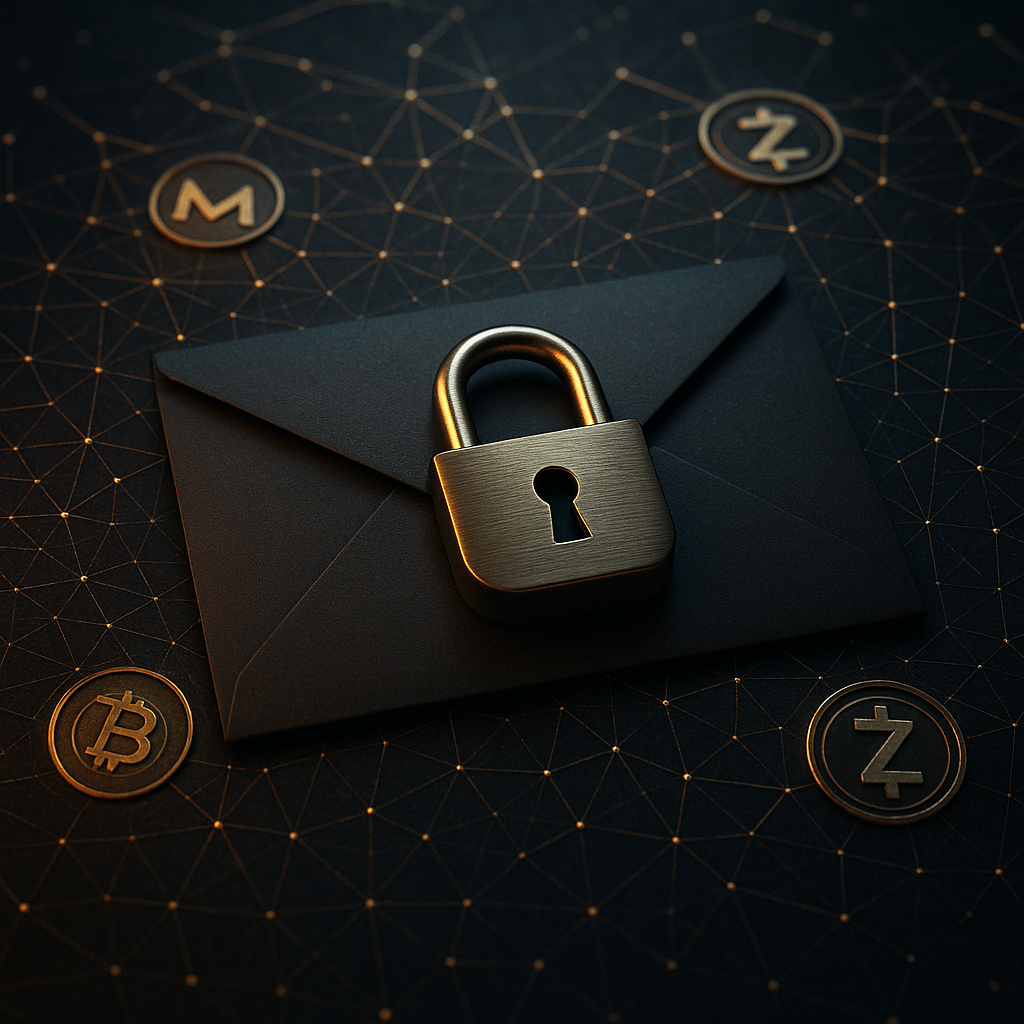
So what exactly is a privacy coin? Think of regular Bitcoin like sending a postcard. Anyone who intercepts it can read the whole message. Privacy coins are more like sealed envelopes—the contents stay hidden from everyone but the intended recipient.
Here's the thing. Most people assume crypto is already private. It's not. Every Bitcoin transaction sits on a public ledger forever, and blockchain analysis firms can trace wallets back to real identities.
Privacy coins like Monero and Zcash exist to fix that gap. They use advanced cryptography to obscure senders, receivers, and amounts.
What I find interesting is how divisive they are. Governments call them tools for criminals. Advocates call them essential for freedom. Both have a point.
But why should you care? Because financial privacy isn't just for people hiding something. Would you want your salary, your donations, and your spending broadcast to the world? Probably not. A surprising fact: over 90% of "private" crypto users cite personal safety, not illegal activity, as their reason.
[IMAGE: Digital envelope with lock symbol over blockchain network | Alt: Crypto Privacy Coins Explained with sealed envelope analogy]
Crypto Privacy Coins Explained: How the Technology Actually Works
Let's get under the hood. Privacy coins don't all work the same way, and that's important.
Monero uses ring signatures, stealth addresses, and something called RingCT. Think about it this way: ring signatures mix your transaction with several decoys, so nobody can tell which signature is really yours. It's like signing a group card—everyone's name is there, but you can't tell who wrote what.
Zcash takes a different route with zk-SNARKs, a form of [LINK: zero-knowledge proofs explained] that lets one party prove a transaction is valid without revealing any details. It's mathematically brilliant.
Dash offers optional privacy through a mixing feature called PrivateSend. Honestly, in my view, optional privacy is weaker privacy—if only some transactions are shielded, they stand out.
And here's a surprising fact: Monero's privacy is on by default for every single transaction. There's no "public" option. That design choice makes it the gold standard for anonymity.
But there's a catch. Stronger privacy usually means larger transaction sizes and slower verification. Nothing comes free. The engineering tradeoff between speed and secrecy defines this entire category.
[LINK: how blockchain transactions work]
The Regulatory Storm Happening Right Now
So where do things stand today? Under pressure.
Privacy coins are getting squeezed hard by regulators worldwide. Major exchanges have delisted Monero and Zcash in several regions. Japan banned them outright years ago. The EU's proposed regulations could effectively outlaw anonymous crypto by 2027.
Here's the thing—regulators aren't necessarily wrong to worry. Privacy coins have been used in ransomware attacks and darknet markets. That's a real problem, and pretending otherwise helps no one.
But think about it this way. Cash is anonymous too, and we don't ban paper money. The analogy is imperfect but useful: prohibition rarely kills demand. It just pushes activity underground.
A surprising fact: despite delistings, Monero's network activity has actually grown. Users simply moved to decentralized exchanges and peer-to-peer platforms.
What most miss is the philosophical stakes here. This isn't just about coins. It's a battle over whether financial privacy remains a right in the digital age. And the outcome will shape crypto's future.
Would you trust a system where every purchase is permanently visible to corporations and governments? That question sits at the heart of the fight. [LINK: crypto regulation trends 2025]
[IMAGE: Gavel over crypto coins with regulatory documents | Alt: Crypto privacy coins facing regulatory challenges explained]
What This Means for You
So how should you actually approach this? Carefully.
If financial privacy matters to you, privacy coins offer genuine protection that standard crypto simply can't match. But you'll face practical hurdles—fewer exchanges, potential legal gray areas depending on your country, and a steeper learning curve.
My honest take? Do your homework first. Check whether privacy coins are legal where you live. Understand that "private" doesn't mean "risk-free."
Because here's the reality: using these coins responsibly is completely legitimate for most people. Buying groceries privately isn't a crime.
Start small. Learn the wallets. Test with tiny amounts before committing anything meaningful. And never treat privacy as an excuse to skip good security habits. The tools protect your transactions, not your carelessness.
Frequently Asked Questions
Q: Are privacy coins legal to own and use?
A: In most countries, yes, privacy coins are completely legal to own and use. However, some nations like Japan and South Korea have restricted or banned them. Regulations change quickly, so always verify your local laws before buying, holding, or transacting with any privacy coin.
Q: Which privacy coin offers the strongest anonymity?
A: Monero is widely considered the strongest because privacy is mandatory on every transaction, using ring signatures and stealth addresses. Zcash offers powerful zero-knowledge cryptography but makes shielding optional, which can weaken overall anonymity across its network compared to Monero's always-on approach.
Q: Can privacy coin transactions really not be traced?
A: Privacy coins make tracing extremely difficult, but no system is perfectly untraceable. User errors, exchange records, and network-level analysis can sometimes reveal information. Monero remains highly resistant to tracing, though researchers continually test its limits. Treat strong privacy as excellent, not absolute or guaranteed.
Final Thoughts
Here's what it comes down to. Crypto Privacy Coins Explained honestly means acknowledging both sides—these tools offer real, meaningful financial privacy, yet they carry legal and practical baggage you can't ignore. In my view, financial privacy is a legitimate need, not a red flag. The technology is genuinely impressive, and the regulatory fight ahead will define digital freedom for years. So don't let fear or hype make the decision for you. Learn the facts, weigh the tradeoffs, and stay curious as this space evolves. Want to dive deeper? Explore our other guides and keep building your crypto knowledge one honest step at a time.
