


TL;DR: Hardware wallets keep your crypto offline and out of hackers' reach. Here's what you need to know before buying one in 2025.
Best Hardware Wallets: What You Need to Know in 2025
Over $2 billion in crypto was stolen in 2024 alone. The best hardware wallets could have stopped most of those losses cold. When you're choosing among the best hardware wallets, you're really choosing peace of mind. So why do so many people still leave their coins on exchanges?
Why the Best Hardware Wallets Matter More Than Ever
Here's the thing. Your crypto is only as safe as the place you store it. Leaving assets on an exchange is like keeping your life savings in a stranger's pocket—convenient, sure, but you don't control the keys.
Hardware wallets flip that model. They store your private keys offline, on a physical device that never exposes them to the internet. Think about it this way: even if your computer is riddled with malware, a hacker can't sign a transaction without physically touching your device and knowing your PIN.
What most miss is that "not your keys, not your coins" isn't just a slogan. It's the core reason cold storage exists. And here's a surprising fact—the FBI has repeatedly recovered stolen funds, but almost never for users who self-custody properly, because those funds were never breached to begin with.
In my view, if you hold more than a few hundred dollars in crypto, a hardware wallet isn't optional. It's basic hygiene. But which one fits your needs? That depends on how you actually use your crypto.
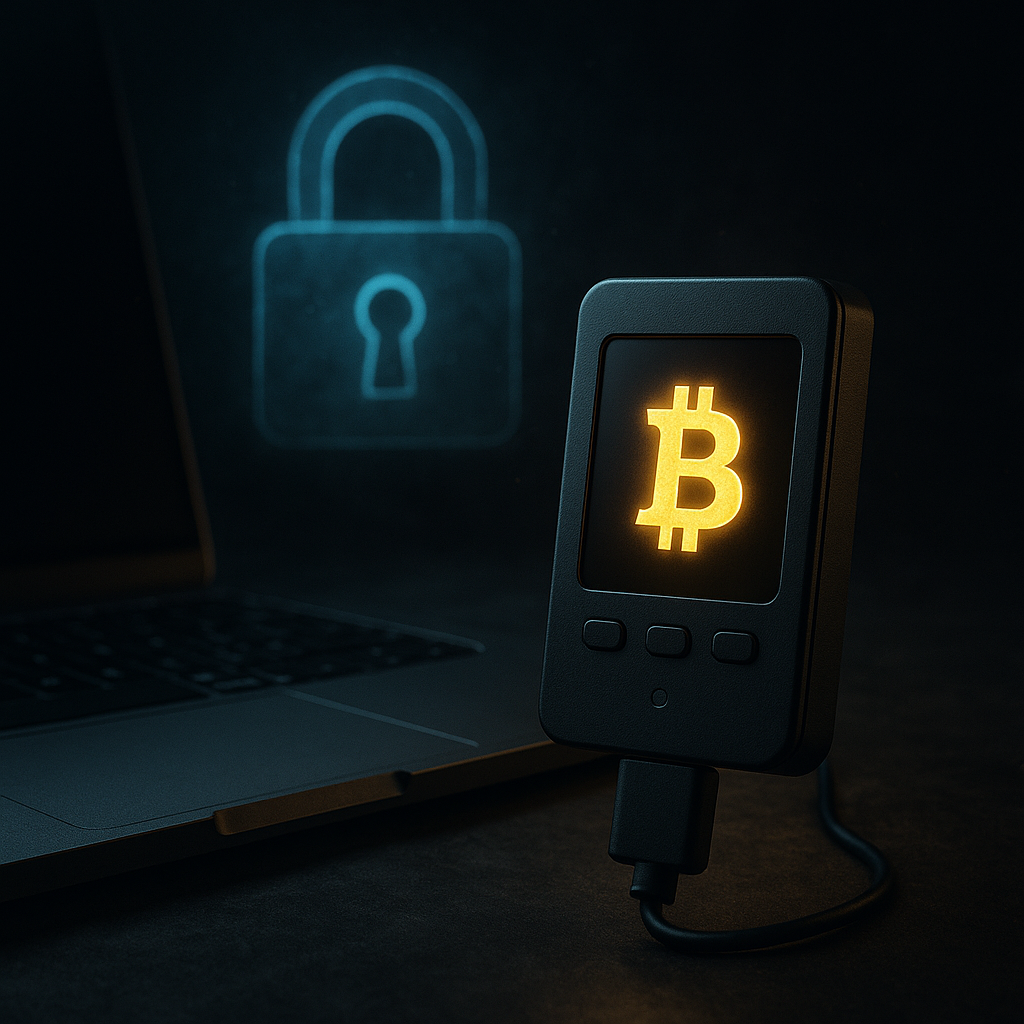
[IMAGE: A hardware wallet next to a laptop | Alt: best hardware wallets for crypto security]
How the Best Hardware Wallets Actually Work
Let me break down the mechanics. A hardware wallet generates and stores your private keys inside a secure chip—the same kind of tamper-resistant hardware used in passports and credit cards.
When you want to send crypto, the transaction is prepared on your computer or phone. But here's the clever part: the actual signing happens inside the device. Your keys never leave. The signed transaction comes back out, ready to broadcast, while the secret stays sealed.
Think of it like a bank vault with a mail slot. You can pass documents in and get signed papers out, but nobody can climb inside and grab the gold.
Most devices back everything up with a 12 or 24-word recovery phrase. Write it down. Store it somewhere safe. Because if your device is lost or destroyed, that phrase restores everything on a new one.
A surprising fact? Some secure chips are rated to resist attacks even under electron microscopes. That's serious engineering.
But no device is bulletproof if you're careless. Phishing sites and fake firmware updates trick users constantly. So verify addresses on the device screen itself. Learn more about [LINK: cold storage best practices] before moving large sums.
[LINK: comparing hardware wallet security chips]
What's Happening in the Hardware Wallet Market Now
The 2025 landscape looks different than even two years ago. Competition has exploded, and prices have dropped while features have grown.
Ledger and Trezor still dominate the conversation, but newcomers are shaking things up. Some now offer air-gapped models that use QR codes instead of USB or Bluetooth—meaning zero physical connection to your online device. Isn't that the dream for the truly paranoid?
Bitcoin-only wallets are also having a moment. By stripping out support for thousands of altcoins, they reduce their attack surface dramatically. For maximalists, that's a compelling trade-off.
Here's the thing about the current market: mobile integration has finally gotten good. Tapping your wallet against your phone to approve a transaction—like a contactless card payment—feels natural now instead of clunky.
A surprising fact worth noting: the hardware wallet industry is projected to nearly triple in value by 2030. That growth reflects mainstream adoption, not just crypto-native users.
What I find interesting is how open-source firmware has become a selling point. Users increasingly want to verify the code themselves rather than trust a black box. And frankly, that's a healthy shift for the whole space. Transparency builds trust. [LINK: multisig setups explained]
[IMAGE: Person approving a crypto transaction on a hardware wallet screen | Alt: best hardware wallets approving secure transaction]
What This Means for You
So where does this leave you? If you're holding crypto for the long haul, the choice is simpler than it looks.
Match the wallet to your habits. Frequent trader? Pick one with smooth mobile support. Long-term holder who rarely moves funds? An air-gapped device offers maximum security with minimal fuss.
Budget matters too, but don't cheap out on security. A wallet costs less than a nice dinner and protects far more.
Here's my honest take: buy directly from the manufacturer. Never from a third-party marketplace. Tampered devices are a real threat, and a resealed box is a red flag.
Set up your recovery phrase carefully. Test a small transaction first. And treat that seed phrase like the crown jewels—because that's exactly what it is.
Frequently Asked Questions
Q: What is the best hardware wallet for beginners in 2025?
A: For beginners, a wallet with a clear screen, simple app, and strong support community works best. Ledger and Trezor remain popular starting points because they balance ease of use with proven security, offer helpful setup guides, and support a wide range of popular cryptocurrencies.
Q: Can a hardware wallet be hacked?
A: It's extremely difficult. Because private keys never leave the secure chip, remote hacking is nearly impossible. The real risks are phishing scams, fake firmware, or losing your recovery phrase. Physical theft alone won't help attackers without your PIN, which locks after several wrong attempts.
Q: Do I need a hardware wallet for small amounts of crypto?
A: Not strictly, but it's wise once your holdings grow. For tiny amounts, a reputable software wallet may suffice. However, if you'd feel sick losing the money, cold storage is worth it. Many users buy one early to build good security habits.
Final Thoughts
Choosing among the best hardware wallets comes down to knowing yourself. How often you transact, how much you hold, and how much control you want all shape the right pick. But the core truth stays constant: self-custody puts you in charge, and that's the whole point of crypto.
Don't overthink it. Pick a reputable device, buy it directly from the maker, and secure your recovery phrase. The peace of mind is worth every penny.
Ready to take control of your assets? Explore your options, compare features, and start protecting what's yours today.
