


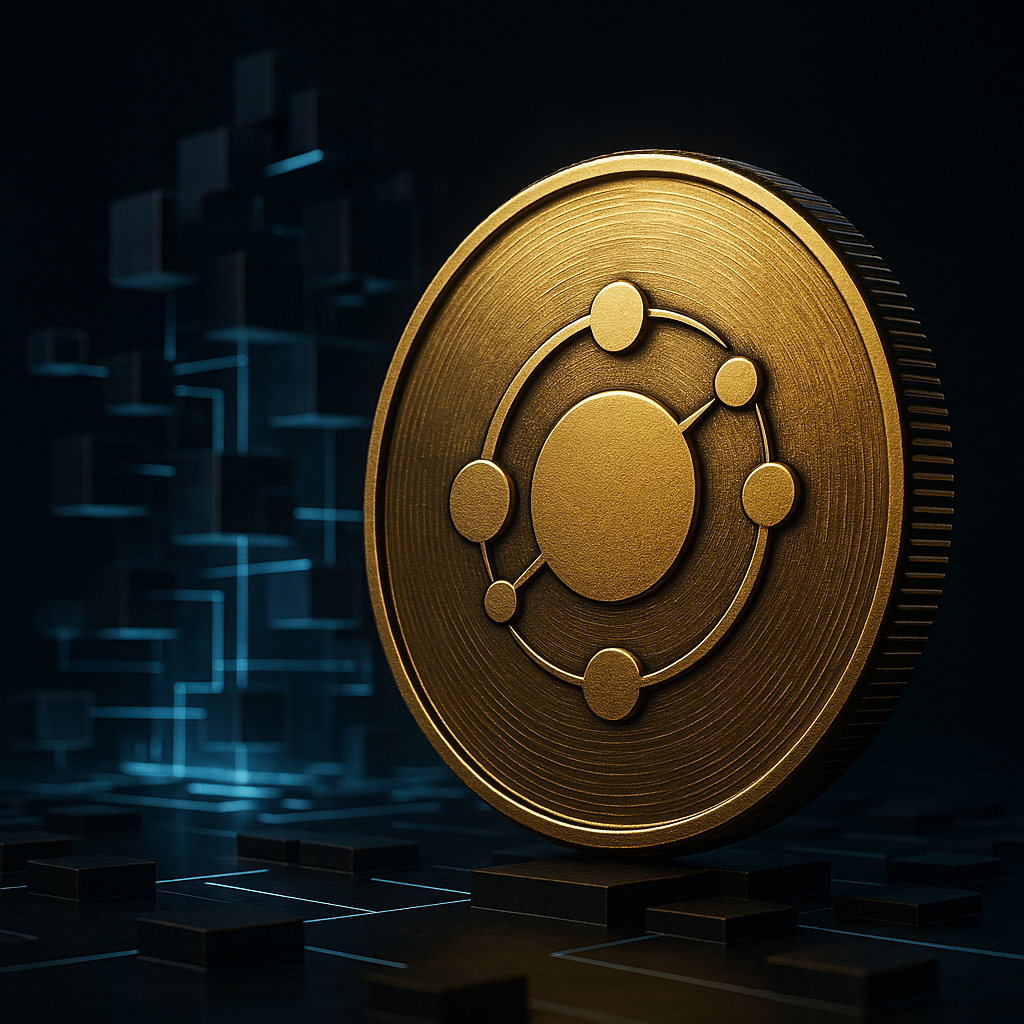
Celestia TIA Token Utility Explained: The Full Breakdown
TL;DR: Celestia's TIA token powers a modular blockchain that separates data availability from execution. Here's what makes its utility genuinely different from typical layer-1 tokens.
Celestia TIA Token Utility Explained: The Full Breakdown
Did you know that Celestia processes data for other blockchains without ever running their apps? That's the whole point. Celestia TIA Token Utility Explained starts with one bold idea: what if a blockchain did just one job, and did it brilliantly? TIA is the fuel behind that modular vision, and it's reshaping how developers think about scaling.
Celestia TIA Token Utility Explained: What It Is and Why It Matters
So what exactly is TIA? It's the native token of Celestia, the first modular blockchain built around data availability. Think about it this way. Most blockchains try to do everything at once—execution, settlement, consensus, and data storage—all crammed into one busy kitchen. Celestia said no. It picked one task: making sure data is available and verifiable.
TIA matters because it's the payment layer for that service. When rollups post their data to Celestia, they pay in TIA. That's real, recurring demand tied to actual usage.
Here's the thing. A surprising fact many miss is that Celestia raised its data throughput ceiling dramatically compared to legacy chains, precisely because it isn't bogged down running smart contracts.
In my view, this specialization is what gives TIA a cleaner utility story than most tokens. It's not promising a hundred features. It's monetizing one essential need. Why does that clarity matter? Because clarity often survives bear markets better than hype does.
[IMAGE: Diagram of Celestia's modular data availability layer | Alt: Celestia TIA token utility explained infographic]
Celestia TIA Token Utility Explained: How It Actually Works
Let's go deeper. TIA has four core jobs, and each one anchors the token to the network's health.
First, gas and fees. Rollups and developers pay TIA to publish data blobs onto Celestia. Second, staking. Validators secure the network by staking TIA, and delegators earn rewards for backing them. Third, governance. Token holders vote on protocol upgrades and parameter changes. Fourth—and this is the clever part—TIA works as a native gas token for rollups built on top of Celestia.
Think about it this way. Imagine an airport that charges every airline for runway access. The runway is data availability. The airlines are rollups. TIA is the landing fee.
But there's more. A surprising fact here is that Celestia introduced "Blobstream," letting Ethereum layer-2s verify Celestia data directly. That expands where TIA demand can come from.
What I find interesting is how staking and inflation interact. New TIA is issued to reward validators, but that inflation rate declines over time. So early participation carries different economics than later entry. Isn't it smart to understand that curve before you commit?
[LINK: How modular blockchains differ from monolithic chains]
What's Happening Now with TIA and Modular Blockchains
The momentum is real. Since launch, dozens of rollups and appchains have chosen Celestia for their data availability layer. That includes projects that would've defaulted to Ethereum a year earlier. The modular thesis is no longer theoretical—it's shipping.
And competition is heating up. EigenDA, Avail, and NEAR's data availability solutions are all fighting for the same market. But Celestia moved first, and first-mover advantage in infrastructure tends to compound.
Here's a real-world analogy. Think of the early cloud computing race. AWS wasn't the only option, but being early and reliable made it the default choice for a generation of startups. Celestia is chasing that same "default" status for data availability.
A surprising fact? Some rollups report significantly lower operating costs using Celestia versus posting all data to Ethereum mainnet. That cost gap is a powerful sales pitch.
But let's stay honest. TIA's token unlocks have been a concern. Large amounts entering circulation can pressure price regardless of strong fundamentals. So does adoption growth outpace supply growth? That's the tension every investor watches. In my view, the technology is ahead of the market's understanding of it—which is either an opportunity or a warning, depending on your timeline.
[IMAGE: Chart comparing data availability layer adoption | Alt: Celestia TIA token utility explained adoption trends]
What This Means for You
So where does this leave you? If you're a developer, Celestia offers a cheaper, faster way to launch a rollup without reinventing consensus. That's a practical win.
If you're an investor, TIA is a bet on the modular future itself—not on one app succeeding, but on many appchains needing shared data availability. Because when the picks-and-shovels layer wins, it wins broadly.
But temper expectations. Token unlocks, competition, and adoption pace all matter. Don't confuse strong tech with guaranteed price action. They're related, not identical.
Here's my honest take. Understanding the utility gives you an edge over people chasing tickers blindly. Knowledge beats FOMO. Ask yourself: are you buying a story, or a functioning network? With TIA, at least there's a real network doing real work underneath.
[LINK: Guide to staking TIA safely]
Frequently Asked Questions
Q: What is the Celestia TIA token used for?
A: TIA powers Celestia's modular blockchain. It's used to pay for data availability when rollups publish data, to stake and secure the network, to vote on governance proposals, and as a native gas token for rollups built directly on Celestia's infrastructure.
Q: Is TIA a good long-term investment?
A: TIA offers real utility tied to modular blockchain adoption, but it carries risks like token unlocks and rising competition. Its value depends on whether rollup adoption outpaces token supply growth. Always research thoroughly and consider your own risk tolerance first.
Q: How is Celestia different from Ethereum?
A: Ethereum handles execution, settlement, and data together. Celestia focuses solely on data availability and consensus, leaving execution to rollups. This modular design lets Celestia offer cheaper, higher-throughput data services, while rollups handle apps and smart contracts separately on top.
Final Thoughts
Celestia TIA Token Utility Explained comes down to one principle: specialization creates value. TIA isn't trying to be everything. It's the payment and security layer for a modular world where blockchains stop doing everything alone and start collaborating like specialized partners.
What most miss is that infrastructure tokens often outlast trends because they solve a permanent need. And data availability isn't going away.
But stay sharp. Adoption, competition, and supply dynamics will decide whether the token's price matches its technical promise. In my view, understanding the utility is step one—acting wisely is step two.
Curious to dig deeper? Explore Celestia's ecosystem, watch the adoption numbers, and decide for yourself where the modular future is headed.
