


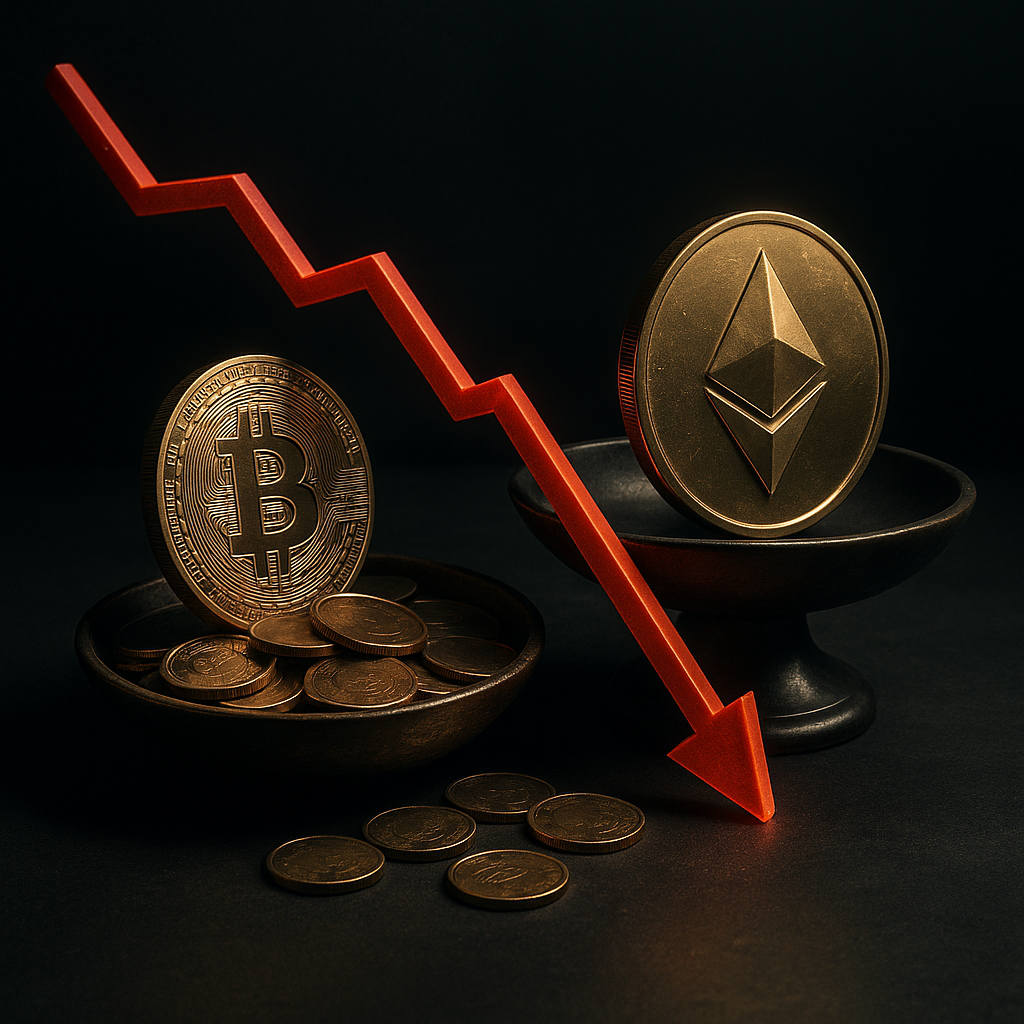
Impermanent Loss Explained: The Truth Nobody Talks About
TL;DR: Impermanent loss is the hidden cost of providing liquidity in DeFi pools. It's not always "impermanent," and understanding it can save you real money.
Impermanent Loss Explained: The Truth Nobody Talks About
Here's a fact that stings: some liquidity providers earn thousands in fees yet still walk away poorer than if they'd done nothing. Impermanent loss explained properly reveals why that happens. This isn't a scam or a bug. It's math working exactly as designed, quietly eating into your position while you celebrate those juicy APY numbers. Ready to see what most people ignore?
Impermanent Loss Explained: Why It Matters More Than You Think
So what actually is it? When you deposit two tokens into a liquidity pool, an automated market maker rebalances them as prices shift. If one token pumps while the other stays flat, you end up holding less of the winner and more of the loser. That gap—between just holding your tokens versus providing liquidity—is the loss.
Think about it this way. Imagine you own a fruit stand where a robot automatically swaps your apples for oranges whenever prices change. If apples suddenly become gold, the robot already sold most of yours cheap. Ouch.
What most miss is that fees can offset this. But not always. In volatile markets, the loss frequently outpaces the rewards.
Surprising fact: a 2x price change in one asset creates roughly a 5.7% loss compared to simply holding. In my view, that number alone should make every yield farmer pause before aping in blindly.
[IMAGE: Chart comparing HODL value vs liquidity pool value | Alt: Impermanent Loss Explained comparison chart]
Impermanent Loss Explained: How the Math Actually Works
Let's go deeper. Most AMMs like Uniswap use a constant product formula: x times y equals k. That means the product of both token reserves must stay constant. When traders swap against your pool, they push the ratio around, and the protocol adjusts automatically.
Here's the thing. You never choose to sell. The pool does it for you, always leaning against the trend. Price goes up? You're selling into strength. Price crashes? You're buying the dip you didn't want.
An analogy: it's like a vending machine that refills popular snacks by giving away your best inventory at yesterday's prices. The machine stays balanced, but you eat the difference.
Ever wondered why whales avoid volatile pairs? Because the deeper the price divergence, the steeper the loss curve becomes—and it's exponential, not linear.
Surprising fact: at a 5x price move, impermanent loss hits around 25.5%. That's brutal for meme-coin pools.
Stablecoin pairs, by contrast, barely move, so the risk stays tiny. That's why yield farming stablecoins feels safer, though returns are thinner too.
[LINK: How Automated Market Makers Work]
The Real Impact on Everyday Liquidity Providers
And here's where theory meets your wallet. Plenty of new DeFi users see a 40% APY, deposit eagerly, then withdraw months later confused about why they're down. They forgot the silent tax.
Because impermanent loss only "realizes" when you exit, many people don't even notice it until it's too late. If prices return to your entry point, the loss vanishes—hence "impermanent." But how often do crypto prices politely return to exactly where you started? Rarely.
Think of it like leaving your car with a valet who joyrides during your dinner. If they park it back perfectly, no harm done. If they crash it, you're paying.
What I find interesting is how protocols now market around this. Some offer impermanent loss protection, gradually covering your shortfall the longer you stay. Others use concentrated liquidity, letting you pick price ranges to boost fee capture.
Surprising fact: during the 2021 bull run, some ETH-based pools posted triple-digit APYs, yet providers still underperformed simple holders by double digits. Yield isn't profit. That distinction matters more than any flashy dashboard suggests.
[IMAGE: Dashboard showing APY vs net returns after impermanent loss | Alt: Impermanent Loss Explained real returns dashboard]
What This Means for You
So how do you play it smart? First, favor correlated or stable pairs when you're starting out. Two tokens that move together create minimal divergence, which shrinks your risk dramatically.
Second, always compare your pool returns against simply holding. If HODLing wins, the liquidity mining wasn't worth it. Tools exist to track this automatically.
Third, don't chase the highest APY blindly. That number often signals extreme volatility, which means fatter losses lurking underneath.
But here's my honest take. Impermanent loss isn't a reason to avoid DeFi entirely. It's a reason to understand what you're signing up for. Fees, incentives, and time can tip the scales in your favor.
Knowledge is your edge here. The providers who profit consistently are the ones who did their homework first.
Frequently Asked Questions
Q: What is impermanent loss in simple terms?
A: Impermanent loss is the difference between holding tokens in your wallet versus depositing them in a liquidity pool. When token prices diverge, the automated market maker rebalances your holdings, leaving you with less value than if you'd simply held the assets untouched.
Q: Is impermanent loss ever permanent?
A: Yes, effectively. The loss becomes permanent the moment you withdraw your funds while prices remain divergent. It's only "impermanent" if prices return to your original entry point, which rarely happens in volatile crypto markets, especially with unrelated token pairs.
Q: How can I reduce impermanent loss?
A: Choose correlated or stablecoin pairs, use pools with high trading fees, and consider protocols offering impermanent loss protection. Concentrated liquidity strategies also help, but they require active management. Always compare your net returns against simply holding both tokens.
Final Thoughts
Impermanent loss explained honestly isn't about scaring you away from DeFi—it's about arming you with reality. Too many guides gloss over this cost while hyping unrealistic yields. But you now know the truth: fees and incentives must outrun the divergence, or you're better off holding. That's the whole game in one sentence.
Do your math, pick your pairs wisely, and never trust an APY at face value. The smartest liquidity providers treat every deposit as a calculated bet, not a guaranteed win. Want to go deeper into DeFi strategies that actually work? Explore our other guides and start making informed moves today.
