

Maker MKR Tokenomics Explained: The Truth Few Discuss
TL;DR: MKR isn't just another governance token—it's a shock absorber for one of DeFi's oldest lending systems. Here's what the tokenomics really tell you.
Maker MKR Tokenomics Explained: The Truth Few Discuss
Did you know MKR has no fixed supply cap, yet its total number of tokens usually shrinks over time? That single fact makes Maker MKR Tokenomics Explained one of the most counterintuitive topics in crypto. Maker MKR Tokenomics Explained matters because MKR behaves less like a coin and more like equity in a decentralized bank. And most people never bother to understand why.
Why Maker MKR Tokenomics Explained Actually Matters
Here's the thing. MKR is the governance and recapitalization token behind MakerDAO, the protocol that issues the DAI stablecoin. So when you hold MKR, you're not holding a speculative meme—you're holding a claim on how a multi-billion dollar lending machine gets run.
Think about it this way. Imagine a bank where the shareholders vote on interest rates, collateral rules, and risk limits. That's MKR holders, essentially. They set stability fees and decide which assets can back DAI.
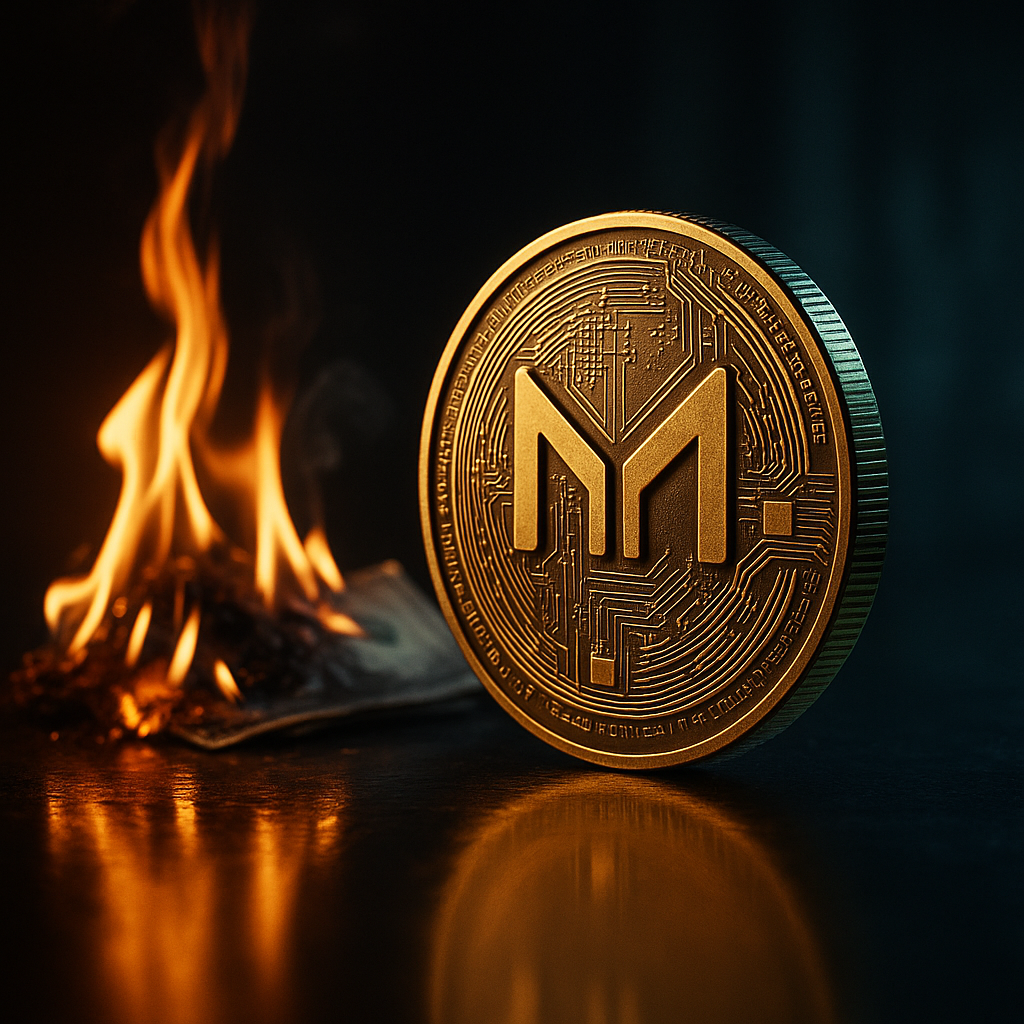
What most miss is the deeper mechanism. When the system earns fees, MKR can be bought and burned, reducing supply. But when the system takes losses—say collateral crashes below the debt it backed—new MKR gets minted and sold to cover the gap. So MKR holders eat the downside.
Surprising fact: during the March 2020 "Black Thursday" crash, MakerDAO had to auction newly minted MKR to cover roughly $4 million in bad debt. In my view, that moment defined MKR better than any whitepaper ever could. It's not passive. It's accountable.
[IMAGE: Diagram of MakerDAO governance and DAI stablecoin flow | Alt: Maker MKR tokenomics explained governance structure]
Maker MKR Tokenomics Explained: How Supply Actually Works
So how does the supply mechanism function day to day? Let's break it down without the jargon.
Users lock collateral—ETH, staked assets, real-world assets—into Maker vaults and mint DAI against it. They pay a stability fee for the privilege. That fee revenue flows into the protocol.
Because Maker introduced the "Smart Burn Engine," surplus revenue gets used to buy MKR off the open market and burn it. Fewer tokens, same value claim. That's deflationary pressure baked into the model.
But here's the flip side. If collateral liquidations fail to cover outstanding DAI, the protocol dips into its surplus buffer first. Only when that buffer empties does it mint fresh MKR. That's the recapitalization backstop.
Think of MKR like a fire insurance pool for a whole neighborhood. Everyone benefits when nothing burns. But if a house goes up in flames and the reserves fall short, the pool members chip in. Painful, but functional.
What I find interesting is the balance. The tokenomics reward good risk management and punish reckless collateral choices. Governance participation isn't cosmetic—it directly shapes your financial exposure. Would you vote carefully if your holdings depended on it?
[LINK: Understanding DAI stablecoin mechanics]
What's Happening Now With MKR
Right now, MakerDAO is deep into its "Endgame" restructuring, arguably the biggest overhaul in its history. The plan reorganizes the protocol into smaller units called SubDAOs and introduces a new token structure.
Here's the surprising part. The rebrand moves the ecosystem toward "Sky" branding, with a new token (USDS and SKY) meant to run alongside or eventually succeed the existing DAI and MKR framework. MKR holders can convert at a fixed ratio. That's a massive shift few casual investors track.
Why does this matter? Because tokenomics aren't static. The buyback-and-burn engine, the real-world asset expansion, the treasury yield from U.S. Treasuries—all of it feeds into MKR's value narrative today far more than raw speculation.
Think of it like a company splitting into subsidiaries while keeping a holding structure at the top. Messy in the short term, but designed for scale.
And the numbers back the ambition. MakerDAO has generated substantial revenue from real-world asset allocations, at times becoming one of the largest holders of tokenized Treasuries in DeFi. In my view, that revenue durability is what separates MKR from tokens with no cash flow behind them. But complexity is a risk too. Confused holders make bad decisions.
[IMAGE: Chart showing MakerDAO revenue sources and MKR burn activity | Alt: Maker MKR tokenomics revenue and burn data]
What This Means for You
So where does this leave you as a potential holder or curious observer?
MKR rewards the informed and penalizes the passive. If you buy it expecting a set-and-forget token, you'll likely be frustrated. This is governance equity with real obligations attached.
Here's my honest take. Treat MKR less like a lottery ticket and more like a stake in a decentralized financial institution. Watch the revenue. Watch the burn rate. Watch the Endgame transition and how conversion mechanics play out.
Because the surplus buffer, stability fees, and collateral quality all directly affect whether your tokens get diluted or scarcer over time. That's rare transparency in crypto. Use it. Do the homework most people skip.
Frequently Asked Questions
Q: What is the total supply of MKR tokens?
A: MKR has no fixed maximum supply. The token count changes dynamically—burned when the protocol earns surplus revenue and minted when bad debt exceeds the buffer. Historically the supply has trended downward, making it deflationary during healthy periods of protocol operation.
Q: How does MKR make money for holders?
A: MKR holders don't earn direct dividends. Instead, protocol revenue funds buyback-and-burn programs that reduce supply, theoretically increasing each token's value. Holders also gain governance power, voting on fees, collateral, and risk parameters that shape the entire MakerDAO system.
Q: Is MKR being replaced by a new token?
A: Under MakerDAO's Endgame plan, MKR can convert into a new token called SKY at a fixed ratio, alongside the USDS stablecoin. MKR still functions today, but holders should track the transition carefully, since tokenomics and branding are actively evolving.
Final Thoughts
Let's be real. Maker MKR Tokenomics Explained isn't a topic you skim in five minutes and master. It's layered, evolving, and genuinely different from the usual token models flooding the market. The mint-and-burn balance, the recapitalization backstop, the real-world asset revenue, the Endgame overhaul—these are the mechanics that actually drive value here.
In my view, that complexity is a feature, not a bug. It filters out lazy money and rewards people who understand what they own. So before you make any decision, dig deeper into how governance and supply interact.
Curious to learn more? Explore the MakerDAO governance forums and keep studying the tokenomics before committing a single dollar.
