


TL;DR: Your seed phrase is the master key to your crypto — lose it or leak it, and your funds vanish. Here's how to protect it before disaster strikes.
How to Protect Your Seed Phrase Before It's Too Late
Did you know that roughly 20% of all Bitcoin — worth billions — is stranded forever because owners lost access to it? Knowing how to protect your seed phrase is the single most important skill in crypto, and most people learn it the hard way. That's the brutal truth. So before you become another cautionary tale, let's fix that today.
Why Learning How to Protect Your Seed Phrase Matters
Here's the thing: your seed phrase isn't just a password. It's the whole vault. Those 12 or 24 words can regenerate every private key in your wallet, which means anyone who reads them owns your money outright. No bank to call. No fraud department. No undo button.
Think about it this way. Imagine writing the combination to your safe on a sticky note, then leaving that note taped to the safe door. That's what most people effectively do with a screenshot on their phone.
What I find interesting is how casually beginners treat this. A surprising fact? Phishing sites tricked users out of over $300 million in a single year, mostly by asking for seed phrases directly.

But learning how to protect your seed phrase changes everything. It's the difference between self-custody being empowering and it being a landmine. In my view, this one habit separates confident holders from anxious ones. Because when you control the key, you control the wealth — permanently.
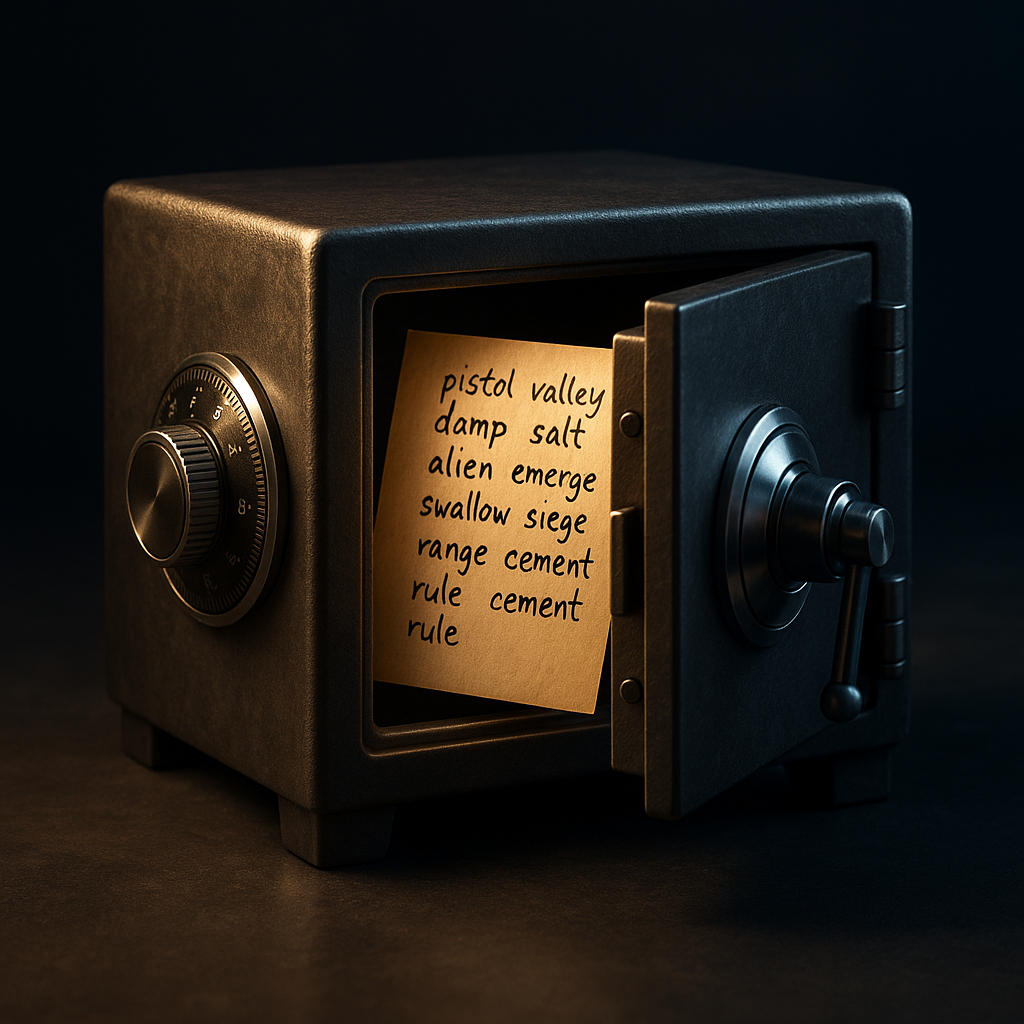
[IMAGE: A handwritten seed phrase card locked inside a metal safe | Alt: how to protect your seed phrase in secure storage]
How to Protect Your Seed Phrase: The Methods That Actually Work
So how does real protection work? It starts with never letting your phrase touch the internet. Ever.
Cold storage is your foundation. A [LINK: hardware wallet guide] keeps your keys offline, generating and storing your seed phrase on a device that never connects to a live network. Think of it like keeping cash in a physical vault instead of a browser tab.
Then comes the backup layer. Paper works, but paper burns. That's why many serious holders stamp their words onto steel plates — fireproof, waterproof, crushproof. What most miss is that a house fire destroys wallets as easily as it destroys documents.
And redundancy matters. Store two copies in separate physical locations, so one flood or theft doesn't wipe you out. Some people use cold storage in a home safe plus a bank deposit box.
Ever wonder why "shard" backups exist? A surprising fact: with methods like Shamir's Secret Sharing, you can split your phrase into pieces where no single fragment reveals anything. Even if someone finds one shard, they get nothing useful. It's clever, and it dramatically lowers your single-point-of-failure risk.
[LINK: best hardware wallets compared]
What's Happening Now in Seed Phrase Security
Right now, the threat landscape is evolving fast. Attackers have gotten sophisticated, and social engineering is their favorite weapon.
Think about it this way. Robbers used to break locks. Now they convince you to hand over the key willingly. Fake wallet apps, cloned support accounts, and malicious QR codes all aim at one target: your recovery words.
A surprising fact from recent reports? Clipboard-hijacking malware silently swaps wallet addresses and even scans images for anything resembling a seed phrase. That's why storing screenshots in cloud photos is genuinely dangerous.
Meanwhile, the industry is fighting back. Multi-signature setups and smart-contract wallets now let users add recovery options without a single vulnerable phrase. [LINK: multisig wallet explained] Passkey-based custody is emerging too, shifting some users away from raw seed phrases entirely.
But here's my honest opinion: these tools help, yet they don't replace personal discipline. Isn't it strange that the most advanced security still fails against a simple lie over the phone?
The trend is clear. As adoption grows, so do attacks. And regulators can't rescue lost self-custody funds. So the responsibility — and the power — stays entirely with you.
[IMAGE: A hacker's phishing message next to a warning symbol | Alt: seed phrase phishing attack warning]
What This Means for You
Let's make this practical. You don't need to be a security expert — you just need a few non-negotiable rules.
First, never type your seed phrase into any website, app, or chat. Legitimate services will never ask. Second, keep it offline, ideally on metal, in at least two locations. Third, test your backup by doing a small recovery before you trust it with life-changing amounts.
In my view, the biggest mistake is procrastination. People plan to "secure it later," then later never comes. Don't be that person.
Start today with one action: move your phrase off any digital device. That single step eliminates the most common attack path instantly. Small effort, massive payoff — and real peace of mind whenever markets get wild.
Frequently Asked Questions
Q: What is the safest way to store a seed phrase?
A: The safest method is offline cold storage on a fireproof medium like a steel backup plate, kept in two separate physical locations. Avoid screenshots, cloud storage, and typing your phrase into any website, since those are the most common ways funds get stolen.
Q: Can someone steal my crypto with just my seed phrase?
A: Yes, absolutely. Anyone with your full seed phrase can recreate your wallet and drain every asset instantly, with no way to reverse it. That's why you should never share it, photograph it, or enter it into unverified apps or so-called support agents.
Q: Should I split my seed phrase into pieces?
A: Splitting can help through proper methods like Shamir's Secret Sharing, which creates shards where no single piece is useful alone. Manually breaking your phrase into halves, however, is risky because losing one part can lock you out permanently. Use tested tools carefully.
Final Thoughts
Crypto hands you total ownership, but ownership comes with total responsibility. Knowing how to protect your seed phrase isn't optional — it's the price of true financial freedom. And honestly, it's not hard once you commit to a few simple habits.
Get it offline. Back it up on metal. Store copies in separate places. Never share it with anyone, ever. Do these four things, and you've already beaten the vast majority of threats out there.
The market will keep moving, and attackers will keep trying. So don't wait for a scare. Secure your phrase now, sleep better tonight, and explore [LINK: our full self-custody checklist] to lock down the rest.
